The Complete Corduroy Buyer's Guide: Wale Types, Specifications, and Sourcing from China
Introduction
Corduroy is having a moment. After decades as a niche heritage fabric, it's back in collections from COS and Arket to Zara and Uniqlo — driven by the "quiet luxury" trend and consumer demand for tactile, durable textiles.
But here's what most buyers don't realize: corduroy is one of the specification-sensitive fabrics in cotton weaving. The difference between fine wale (21 wales/inch) and wide wale (6 wales/inch) isn't just aesthetic — it changes the hand feel, drape, shrinkage behavior, and end-use entirely. Get the spec wrong, and your "vintage workwear jacket" becomes a shapeless sack.
This guide is written from our production floor in Keqiao, where we weave three corduroy constructions daily. Real numbers, real prices, real quality parameters — not catalog fluff.
What Is Corduroy? The Construction That Matters
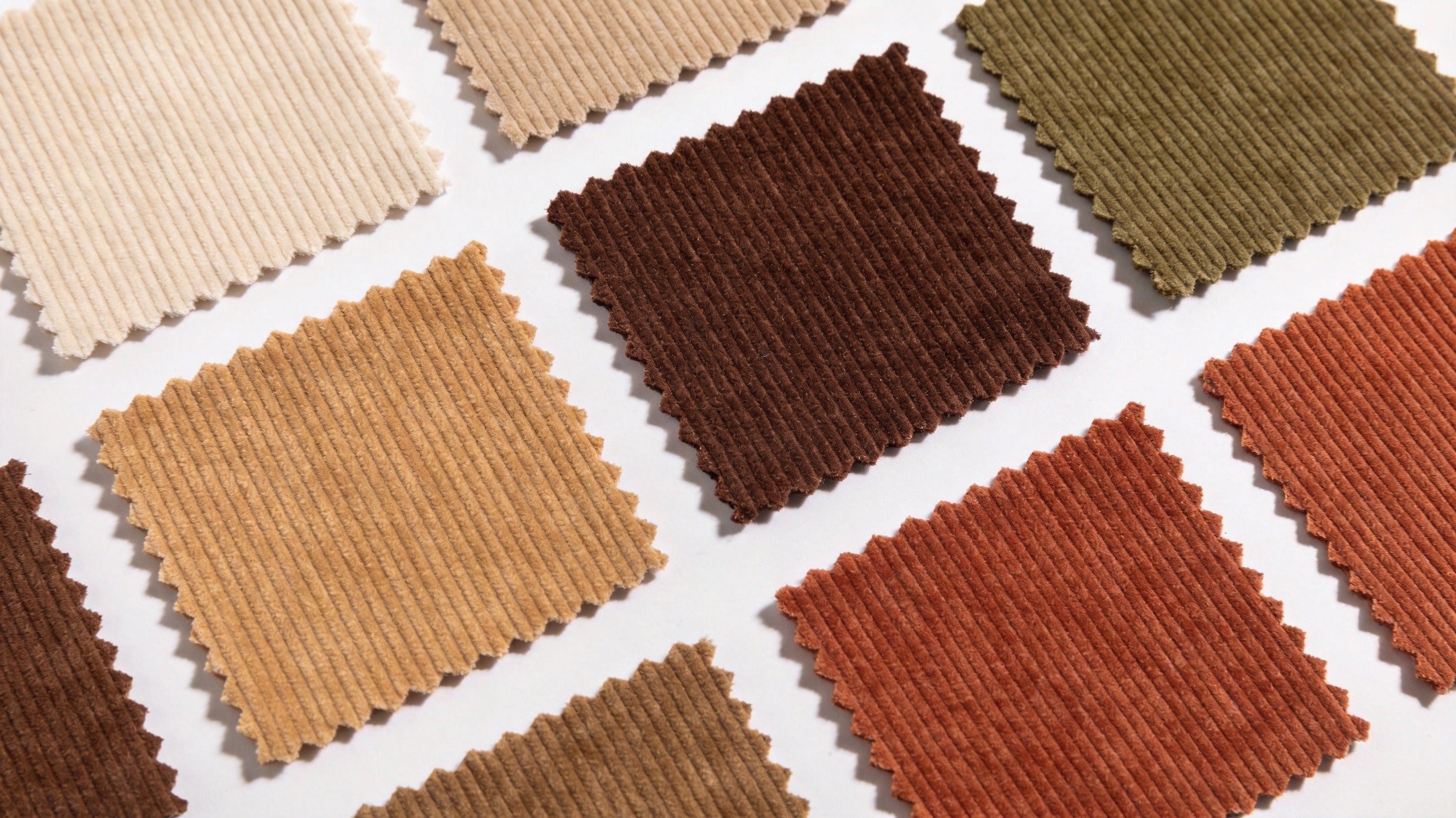
Corduroy is a cut pile fabric — extra weft yarns float across the surface, then get sliced to create the characteristic ridges ("wales"). The wale count (ridges per inch) determines everything:
| Wale Count | Name | Character | Best For |
|---|---|---|---|
| 18–21 wales/inch | Fine wale (pinwale) | Soft, lightweight, elegant drape | Dresses, blouses, lightweight trousers |
| 11–14 wales/inch | Mid wale (regular) | Balanced hand, versatile | Chinos, shirts, overshirts, skirts |
| 3–8 wales/inch | Wide wale (elephant cord) | Bold texture, heavy, rugged | Jackets, coats, upholstery, bags |
The hidden variable: Wale count alone doesn't define the fabric. GSM (grams per square meter) is equally critical. A 14-wale corduroy at 200 GSM feels completely different from the same 14-wale at 350 GSM. Always specify both.
Our Three Corduroy Constructions: Real Specifications
MJ128 — Fine Wale Corduroy
| Wale Count | ~21 wales/inch (fine wale) |
| Composition | 100% Cotton |
| Weight | 145 GSM |
| Width | 146 cm (57/58") |
| Hand Feel | Soft, velvety pile, lightweight |
| Style Direction | Elegant womenswear — shirt dresses, flowing dresses, blouses |
| FOB Price | US $1.98 – $2.08/m |
| MOQ | 300 meters per color |
| Lead Time | ~10 days after color confirmation |
Why 145 GSM matters: This is deliberately light for corduroy. Most fine wales run 160–200 GSM. We keep it at 145 because our target garments are warm-weather elegant pieces — think COS-style shirt dresses, not winter coats. The lighter weight also means lower shipping cost per meter.
MJ138 — Mid Wale Stretch Corduroy
| Wale Count | ~11 wales/inch (mid wale) |
| Composition | 97% Cotton · 3% Spandex |
| Weight | 340 GSM |
| Width | 150 cm (59") |
| Hand Feel | Substantial, slight stretch for comfort |
| Style Direction | Business-casual menswear — chinos, overshirts, smart jackets |
| FOB Price | US $2.05 – $2.20/m |
| MOQ | 300 meters per color |
| Lead Time | ~10 days after color confirmation |
The stretch factor: Adding 3% spandex to mid-wale corduroy is a calculated trade-off. You gain comfort (critical for chinos that need to sit, bend, move) but lose some of the "pure cotton" marketing angle. Most Western brands accept this for comfort-driven garments. If you need 100% cotton, we can produce MJ138 without spandex at the same 11-wale construction — just specify at order.
MJ555 — Wide Wale Corduroy
| Wale Count | ~6 wales/inch (wide wale) |
| Composition | 100% Cotton |
| Weight | 290–300 GSM |
| Width | 147 cm (58") |
| Hand Feel | Bold ribs, rugged vintage character |
| Style Direction | Statement outerwear — trucker jackets, utility coats, heavy overshirts |
| FOB Price | US $2.88 – $2.98/m |
| MOQ | 300 meters per color |
| Lead Time | ~10 days after color confirmation |
Why wide wale costs more: Fewer ridges per inch means each ridge is wider and deeper. The pile yarn consumption is higher, and the cutting process is slower. Budget approximately 40–50% cost premium over fine wale.
How to Choose the Right Corduroy for Your Garment
| Garment Type | Recommended Wale | Recommended GSM | Why |
|---|---|---|---|
| Summer dress / blouse | Fine (18–21) | 120–160 | Light, drapes well, breathable |
| Chinos / trousers | Mid (11–14) | 250–350 | Durable, comfortable, holds shape |
| Overshirt / shirt-jacket | Mid (11–14) | 200–280 | Structured but not heavy |
| Trucker jacket | Wide (3–8) | 280–350 | Rugged texture, wind-resistant |
| Winter coat | Wide (3–6) | 300–400 | Maximum warmth and visual impact |
| Upholstery / accessories | Wide (3–6) | 350+ | Extreme durability, bold look |
Quality Testing: What to Ask Your Supplier For
| Test | Standard | Acceptable Range | Why It Matters |
|---|---|---|---|
| Pile retention | ISO 12945-2 | Grade 4+ (Martindale 20,000+ cycles) | Corduroy's ridges can flatten with wear |
| Shrinkage | AATCC 135 | ≤3% warp, ≤2% weft | Critical for pattern cutting accuracy |
| Colorfastness to rubbing | ISO 105-X12 | Grade 4+ dry, Grade 3+ wet | Corduroy pile can transfer color |
| Colorfastness to washing | ISO 105-C06 | Grade 4+ | Prevents fading after home laundering |
| Tensile strength | ISO 13934-1 | Warp ≥250N, Weft ≥200N | Ensures seam durability |
| Pile height uniformity | Visual + caliper | ±0.5mm across width | Uneven pile = visible shading bands |
MOQ Strategy for Corduroy: How to Start Small
Corduroy traditionally has high MOQs (1,000–2,000m per color) because each color requires a separate dye lot, and the weft yarn setup is specific to the wale construction.
How We Keep MOQ at 300m
- Reactive dyeing in small batches — We use lab-scale dyeing machines (50–300m capacity) instead of industrial jiggers. Slightly higher per-meter dyeing cost, but eliminates the 1,000m minimum.
- Standardized grey fabric inventory — We keep undyed (grey) corduroy in stock for our three constructions. When you order, we only need to dye and finish — cutting lead time from 30 days to 10.
- Color consolidation — If multiple buyers order similar shades (e.g., navy, olive, burgundy), we consolidate dye lots. You get your 300m at a price that reflects a larger batch.
Common Mistakes First-Time Corduroy Buyers Make
- Ordering by photo only — Corduroy's pile texture is impossible to judge from photos. Always get a physical sample first.
- Ignoring pile direction — Corduroy has a "nap." All pattern pieces must be cut in the same pile direction or the garment will show visible shade differences.
- Not testing for "roping" — Roping = wales gradually separating at edges. Ask for a 10-cycle wash test on a 30cm×30cm sample and check the edges.
- Confusing corduroy with velveteen — Corduroy has distinct ridges (cut pile in channels); velveteen has an all-over short pile. Substituting one for the other changes the garment completely.
Sourcing Corduroy from Keqiao: Why Location Matters
Keqiao (绍兴柯桥) is the world's largest textile trading hub. For corduroy specifically:
- 30+ active corduroy mills within a 20km radius
- Complete supply chain — yarn suppliers, dye houses, finishing mills, all local
- 48-hour sample turnaround — grey fabric is always in stock; dye and finish in 2 days
- Competitive pricing — cluster effect keeps costs 15–20% below isolated mills
Final Checklist: Before You Order Corduroy
- Confirmed wale count (fine/mid/wide) matches your garment design
- Confirmed GSM — not just wale count
- Physical sample received and approved (including wash test)
- Color lab dip approved under D65 standard light
- Pile direction marked on sample for cutting reference
- Shrinkage test results received (≤3% warp, ≤2% weft)
- MOQ confirmed in writing (per color, per construction)
- Payment terms agreed (30% deposit, 70% against B/L)
- Third-party inspection arranged for first order
- Lead time confirmed (10 days production + shipping)
This guide is written by Mujia Textile, a cotton corduroy manufacturer based in Keqiao, Shaoxing, China. We produce three corduroy constructions (fine wale MJ128, mid wale stretch MJ138, wide wale MJ555) with FOB prices published online and MOQ from 300 meters per color. All specifications in this article reflect our actual production standards.
Questions about corduroy sourcing?
Send us your garment spec sheet — we'll recommend the right wale, GSM, and construction within 24 hours. Free swatch cards shipped worldwide.
Request a Quote & Free Swatches