How to Source Velvet & Velour for Home Textiles and Apparel
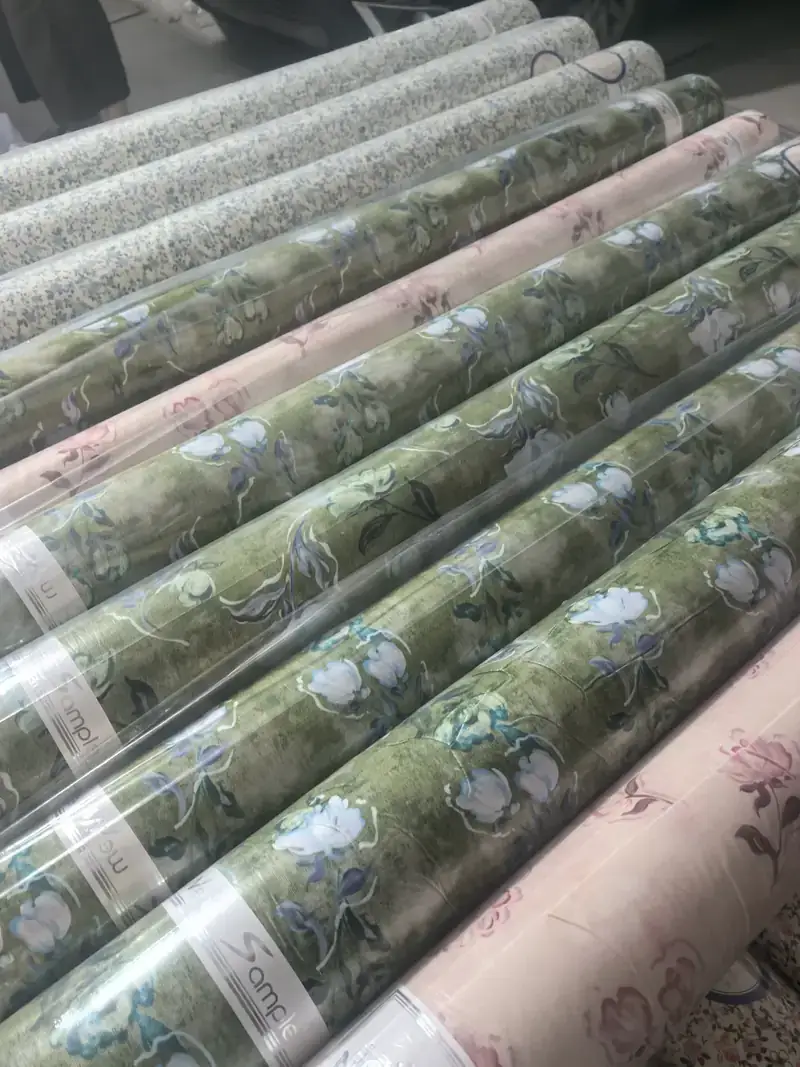
If you are sourcing velvet for the first time — or re-sourcing after a bad shipment — this guide walks through the decisions that actually determine whether your velvet order succeeds: fiber and construction choices, pile quality, weight, testing, and how to structure the order so the factory can deliver consistent quality. It is written from the mill side: we weave velvet and corduroy in our own mill in Zhejiang, and we see where buyers get stuck at every step.
Table of Contents
- Start with the application, not the fabric name
- Woven velvet or knitted velour — decide the construction
- Fiber content: what the label really buys you
- Pile quality: the three numbers that matter
- Weight (GSM): match it to the job
- Finishing: ask who does it and where
- Testing: minimum battery before bulk
- MOQ, pricing, and how to structure the order
- Sourcing timeline, realistically
- Vetting the supplier: one test that catches most pretenders
- The one-paragraph version
Start with the application, not the fabric name
"Velvet" is not one product. The same word covers woven velvet for upholstery, knitted velour for loungewear, burnout velvet for fashion pieces, and velveteen for childrenswear. Before you write to any supplier, fix three variables:
- End use: upholstery (sofa, ottoman), curtains, bedding, apparel (dresses, blazers, loungewear), or accessories.
- Contact surface: will the pile be rubbed constantly (sofa seats) or rarely (curtain faces)? Abrasion requirements differ by an order of magnitude.
- Care expectation: machine-washable loungewear and dry-clean-only upholstery velvet are different supply chains entirely.
A sofa spec that works at 350 g/m² woven velvet will fail as a 180 g/m² dress velour, and vice versa. Buyers who skip this step usually end up with "good fabric, wrong project."
Woven velvet or knitted velour — decide the construction
This is the single biggest fork in the road:
- Woven velvet: two fabric layers woven face-to-face and cut apart, producing an upright, dense pile. Better dimensional stability, better abrasion resistance, heavier hand. This is what you want for upholstery, heavy curtains, and structured apparel.
- Knitted velour: looped pile on a knit base. Stretchier, softer drape, lighter weight, lower cost per meter, easier care. This is what loungewear, robes, and casual dresses want.
The full decision matrix — including how each behaves in cutting and sewing — is in our woven vs knitted velvet buyer's guide. If your product line spans both (a home brand adding loungewear, for example), source them from a mill that does both on separate lines; production teams that specialize in one often mishandle the other.
| Line | Construction | Composition | Weight | Width | MOQ | Lead time |
|---|---|---|---|---|---|---|
| Burnout devoré MJ-VBR01 |
Woven; pile opened by printed devoré paste | 80% viscose / 20% nylon | 170–200 g/m² | 140 cm | 300 m per colourway | ~15 working days |
| Solid-dyed velvet MJ-VSL01 |
Woven; piece-dyed from white greige | 80% viscose / 20% nylon | 250 g/m² | 140 cm | 300 m per colour | ~15 days |
| Stretch velvet MJ 7124 |
Warp-knit; short cropped pile, 4-way stretch | 95% polyester / 5% spandex | 250 g/m² | 155–160 cm | 300 m in-stock colour 2,000 m custom colour |
Within 15 days |
The first three lines ship from greige we hold in stock, which is why the lead time is measured in days rather than months. Upholstery-grade velvets are outside our range and are not quoted here.
Fiber content: what the label really buys you
- 100% polyester velvet: the volume workhorse. Color range is widest, price is most stable, and modern microfiber polyester achieves a hand that most consumers cannot distinguish from silk-blend at arm's length. Recycled polyester (GRS-certified) is available from serious mills.
- Cotton velveteen: breathable, matte, preferred for childrenswear and premium casual. Shrinks more than polyester — demand pre-shrinkage data.
- Silk or silk-blend velvet: luxury tier; expect MOQ premiums, delicate care, and stricter inspection standards.
- Blends (poly/cotton, poly/viscose): tuning handles — cotton face for hand, polyester back for stability.
Ask the supplier to state fiber content on the spec sheet with percentages, not marketing words like "silk-feel." Percentages are testable; feelings are not.
Pile quality: the three numbers that matter
Velvet lives and dies on its pile. When you evaluate samples, put three measurements in your spec:
- Pile height (in mm). Upholstery typically sits around 1.0–1.5 mm; fashion velvet can go higher. Tolerance matters more than the target: ±0.2 mm across the roll is a competent mill; ±0.5 mm means visible shading after cutting.
- Pile density / weight share: how much of the total GSM is pile yarn versus ground cloth. Denser pile resists crushing and shading.
- Shading behavior: velvet shows light differently depending on pile direction. This is physics, not a defect — but a well-finished roll shades uniformly. Our pile direction and shade variation guide explains how to mark and cut so direction consistency protects you.
Run your palm both ways across the sample. If the "against the pile" direction feels gritty or the recovery is slow, walk away regardless of price.
Weight (GSM): match it to the job
For home textiles the bands overlap rather than stack: lightweight decorative velvet runs 200–280 g/m², curtain velvet 250–350 g/m², and upholstery velvet 280–350 g/m² for accent pieces, 350–420 g/m² for mainstream sofas and 420–500 g/m² for contract seating. Below 200 g/m² you are in sheer or lining territory. Our own stocked lines sit at 170–200 g/m² (burnout) and 250 g/m² (solid-dyed and stretch) — decorative and apparel weights; anything from 280 g/m² upward is woven to order. For apparel velour: 180–280 g/m² covers most loungewear and dresses. The full framework for choosing — and how GSM interacts with cost — is in our fabric weight guide, and our breakdown of velvet cost structure at different order volumes shows why the same 300 g/m² fabric can quote 20% apart.
Finishing: ask who does it and where
Most velvet finishing (shearing, anti-crush treatment, heat setting) happens after weaving. Ask one direct question: "Is finishing done at your mill or a partner facility?" A transparent answer is a good sign either way — we weave in our own mill and work with a partner dyehouse for finishing, and we state that openly because buyers deserve to know where quality control points actually sit. What you should not accept is vagueness, because if something goes wrong in finishing, you need to know who owns the fix.
Testing: minimum battery before bulk
For velvet going into homes or apparel, require these on the bulk lot (not just the lab dip):
- Colorfastness to rubbing (dry + wet) — velvet pile transfers color more readily than flat wovens; ask for grade 4+ dry, 3+ wet at minimum.
- Colorfastness to light — critical for curtains and window-adjacent upholstery.
- Shrinkage — after one wash cycle (apparel) or one professional clean (upholstery). Industry-acceptable ranges run ≤3–5%; get the actual tested number, not the category.
- Pile abrasion (Martindale) for upholstery — sofa-grade woven velvet should clear 25,000+ cycles for residential use; ask for the actual report.
- Composition verification — confirms the spec sheet percentages.
MOQ, pricing, and how to structure the order
Industry-typical velvet MOQs run around 500 kg or 1,000 meters per color at full-custom specs, with below-MOQ surcharges commonly in the $80–150 per color range across the market. Our standard is lower and it is the same on every stocked line: 300 metres per colour, whether the cloth is burnout, solid-dyed or stretch. A custom dye colour goes to 2,000 m, and a newly developed pattern to 500–1,000 m depending on layout — both quoted before you commit. Current color ladder and per-fabric details are on the product index, with terms explained in our MOQ and payment guide.
Practical structuring tips from the mill floor:
- Fewer colors, larger runs: 2 colors × 1,500 m beats 6 colors × 500 m on both price and shade consistency.
- Freeze the lab dip approval before bulk; shade drift between dips is the #1 velvet dispute.
- Confirm pile direction convention (up or down) in writing before cutting begins.
Sourcing timeline, realistically
Sample + lab dip: 1–2 weeks. Bulk: about 15 working days after lab-dip approval on the lines we hold greige for, because weaving is already done and only dyeing and finishing remain. Where the greige itself has to be woven, or a new pattern built, expect 3–5 weeks. Add shipping time on top. Building a realistic sourcing timeline from sample to bulk into your calendar is cheaper than expediting later.
Vetting the supplier: one test that catches most pretenders
Ask the supplier to describe, in their own words, how they handle shade variation between the head end and tail end of a velvet roll. A real mill answers with process detail (lot weaving, side-center monitoring, shearing parameters). A trading company answers with reassurance ("don't worry, good quality"). The deeper version of this test — documents to request, video-call tells, certificate verification — is in our guide on how to verify you're dealing with a velvet mill, not a trader.
The one-paragraph version
Fix the application first, choose woven vs knitted deliberately, demand pile specs with tolerances, test the bulk lot (not the sample), structure the order around fewer colors, and vet the supplier with process questions rather than price questions. Buyers who run this sequence get consistent velvet; buyers who improvise get stories.
Questions about a specific spec? Send us your project parameters — end use, target weight, and color count — and we will tell you honestly whether it fits our lines.
Frequently Asked Questions
What is the minimum order for velvet from a Chinese mill?
Industry-typical velvet MOQs run around 500 kg or 1,000 metres per colour at full-custom specifications, with below-MOQ surcharges commonly in the 80 to 150 US dollar per colour range. Our own standard is 300 metres per colour on every stocked line - burnout, solid-dyed and stretch. A custom dye colour goes to 2,000 metres and a newly developed pattern to 500-1,000 metres, both quoted before you commit.
Should I buy woven velvet or knitted velour?
Decide from the application. Upholstery, heavy curtains and structured apparel need woven velvet, because the woven ground is dimensionally stable and resists abrasion. Loungewear, robes and casual dresses suit knitted velour, which stretches, drapes softer and costs less per metre. A sofa specification at 350 gsm will fail as a 180 gsm dress velour, and the reverse is also true.
How much does velvet shrink, and what should I require?
Industry-acceptable residual shrinkage runs at or below 3 to 5 percent after one wash cycle for apparel, or one professional clean for upholstery. Ask for the actual tested figure rather than the category, and specify the test method, such as ISO 6330 or AATCC 135, in the purchase contract.
Which tests should I require on the bulk lot rather than the sample?
Colourfastness to rubbing, dry and wet, at grade 4 or better dry and 3 or better wet; colourfastness to light for curtains and window-adjacent upholstery; shrinkage after one wash or clean; Martindale pile abrasion for upholstery, where residential sofa grade should clear 25,000 cycles; and composition verification to confirm the percentages on the spec sheet.