What GSM for Sofa Velvet? Choosing Weight by Use, Not Guesswork
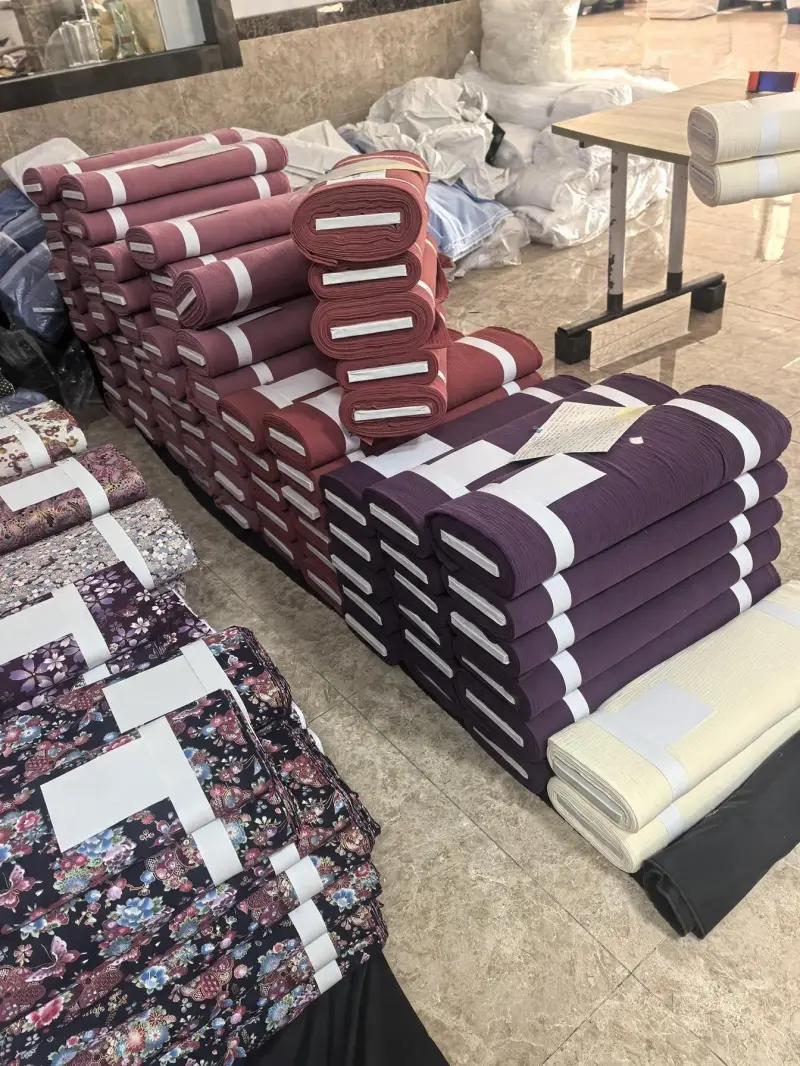
"How many GSM should sofa velvet be?" is the right question asked slightly wrong — because the honest answer is a range, and the range depends on which part of the sofa, which market, and which construction. This guide gives you the actual weight bands used in the trade, explains what each band buys you, and shows how to combine GSM with the one test number that matters more than weight for upholstery: Martindale abrasion. The weight bands below are the ones used across the upholstery trade. For transparency about where we sit in them: our own stocked velvet runs 170–270 g/m² (burnout devoré at 170–200, stretch velvet at 250), which covers curtains, cushions, throws and apparel. Seating weights from 280 g/m² upward are woven to order, so the bands are still relevant to what you can buy from us — they just arrive as a development, not off the shelf.
Table of Contents
- First, the quick answer
- Why weight alone doesn't grade a sofa fabric
- The weight bands in detail
- Construction check: is it even woven?
- Fiber and weight interact
- The checks that turn a weight spec into a sofa spec
- Matching weight to market: three buyer profiles
- The one-paragraph version
First, the quick answer
For woven upholstery velvet (the correct construction for seating):
- Light-duty upholstery (accent chairs, headboards, low-traffic furniture): 280–350 g/m²
- Mainstream residential sofas: 350–420 g/m²
- Heavy-duty / contract-grade (hospitality, offices, high-traffic family sofas): 420–500 g/m²
Below 280 g/m², you are generally in curtain/decor territory, not seating. If a supplier offers "sofa velvet" at 220 g/m², ask what seat they imagine it on.
Why weight alone doesn't grade a sofa fabric
GSM measures mass per area — it tells you how much fabric there is, not how well it survives a decade of sitting. Two 380 g/m² velvets can differ enormously in durability depending on pile density, fiber, and finishing. That is why professional buyers read weight together with:
- Martindale abrasion cycles: the industry's seat-survival number. Residential-grade woven velvet should clear 25,000 cycles; family-heavy use and contract work typically specify 40,000+. A heavy-but-fragile 450 g/m² fabric with 15,000 cycles is a worse sofa fabric than a well-built 380 g/m² one at 40,000.
- Pile density and height: denser pile at equal weight outperforms sparse pile.
- Backing quality: the woven ground holds the pile; a skimpy ground sheds pile under stress.
So treat GSM as a band filter (is this fabric even in the seating class?) and Martindale as the qualification test (does it survive the seat?). Our fabric weight selection guide covers the full GSM framework across fabric types.
| Weight band | What it is used for | Martindale target | How it is supplied |
|---|---|---|---|
| 170–200 g/m² | Curtains, decorative cushions, throws; burnout devoré for sheer-pattern pieces | 15,000–20,000 | Stocked — burnout devoré BR-01 to BR-13, 170–200 g/m² |
| 250 g/m² | Apparel, accent cushions, light soft furnishings | 20,000–25,000 | Stocked — MJ 7124 stretch velvet, 250 g/m², 76 colours |
| 280–350 g/m² | Accent chairs, headboards, low-traffic furniture | 25,000 | Woven to order |
| 350–420 g/m² | Mainstream residential sofas | 30,000–40,000 | Woven to order |
| 420–500 g/m² | Contract, hospitality, high-traffic households | 40,000+ | Woven to order |
The two stocked rows are what ships from our own loom; the three seating rows are developed against your brief. Both routes carry the same test-report requirement.
The weight bands in detail
280–350 g/m²: the light residential band
Feels refined, drapes well over cushion edges, keeps costs down. Works for accent chairs, occasional-use furniture, headboards, and cushion programs. Trade-off: lower pile mass means faster visual wear in high-contact zones — seat fronts and armrests. Many brands use this band for coordinated pieces (bedroom benches, decorative chairs) while spec'ing heavier for the main sofa.
350–420 g/m²: the volume sweet spot
Where most quality residential sofas live. Enough pile mass for crush recovery and abrasion life, still efficient on cost and sewing handling. If you are launching a sofa line without a specific durability brief, this is the default band — and where color programs (multiple shades across the range) are most practical.
420–500 g/m²: heavy residential and contract
For high-traffic households, rental furniture, hospitality, and office seating. The extra mass buys Martindale headroom and a denser hand that photographs and wears "premium." Note the practical consequences: heavier fabric stresses sewing machines and consumes more material per sofa (yield planning matters), and price per meter rises accordingly — our velvet cost structure guide shows how weight and order volume interact in the quote.
Construction check: is it even woven?
Before comparing weights, confirm the fabric is woven velvet, not knitted velour. Knit-based velours, however heavy, are apparel-grade: the knitted ground does not anchor pile against the mechanical abuse of a seat. A 300 g/m² velour will pill and pull long before a 320 g/m² woven velvet shows wear. The construction comparison is in our woven velvet vs knitted velour guide — if a quote does not state construction explicitly, ask before comparing prices.
Fiber and weight interact
At the same GSM, fiber changes the story:
- Polyester (incl. recycled GRS): the mainstream sofa choice. Most resilient per gram, widest color range, easiest care. A 380 g/m² polyester woven velvet is the workhorse of the industry.
- Cotton velveteen: heavier feel, matte look, breathable — but at equal GSM it generally tests lower on abrasion than polyester, so spec the higher end of the band if cotton is the aesthetic requirement.
- Blends: cotton-face/polyester-back builds combine hand with durability; ask which side carries the wear.
The checks that turn a weight spec into a sofa spec
Require from the bulk lot, not just samples:
- Martindale report at your specified cycles, third-party lab with report number.
- Pilling grade (sofa cushions see constant rubbing).
- Colorfastness to rubbing, dry and wet — velvet pile transfers dye more readily than flat wovens.
- Colorfastness to light for window-adjacent seating.
- Seam slippage — heavy velvet on overstuffed cushions stresses seams.
- Shade consistency across rolls — sofa panels cut from different rolls must not mismatch; the pile-direction and shading discipline in our shade variation guide is essential reading for your cutting room.
An inspection partner or the mill's own QC should run these against an AQL plan — the standards are in our fabric quality control guide.
Matching weight to market: three buyer profiles
- E-commerce furniture brand (flat-pack, mid-market): 350–420 g/m² polyester woven velvet, 30,000+ Martindale, rich color program. Weight keeps cushions plump after shipping compression; color breadth drives the range.
- Premium upholstery maker: 400–460 g/m², dense pile, deeper Martindale spec, heavier emphasis on shade consistency and finishing quality.
- Hospitality/contract: 420–500 g/m² with formal contract testing (higher Martindale, fire-retardancy requirements where applicable — confirm the standard your market requires).
The one-paragraph version
Sofa velvet lives in the 280–500 g/m² woven band: 280–350 for light residential, 350–420 for mainstream sofas, 420–500 for heavy and contract use. Weight gets you into the class; Martindale abrasion (25,000+ residential, 40,000+ contract), pile density, and tested colorfastness decide whether the fabric survives the seat. And always confirm the construction is woven — no GSM rescues a knitted ground on a sofa.
Tell us the furniture type, market and colour plan via our contact page. If you are buying in the 170–270 g/m² range we quote from stock; if you need a seating weight above 280 g/m² we confirm the band, the Martindale target and the development timeline before you commit, and the bulk lot ships with the test reports to back it.
Frequently Asked Questions
What GSM should sofa velvet be?
For woven upholstery velvet, light-duty seating such as accent chairs and headboards sits at 280 to 350 gsm; mainstream residential sofas at 350 to 420 gsm; and heavy-duty or contract-grade seating at 420 to 500 gsm. Below 280 gsm you are generally in curtain and decorative territory rather than seating.
Is higher GSM always better for a sofa?
No. GSM measures mass per area and says nothing about how tightly the pile is anchored or how the cloth recovers after compression. A 380 gsm velvet with dense, well-set pile will outwear a loosely constructed 450 gsm cloth. Weight has to be read together with pile density, abrasion result and recovery.
What Martindale result should I ask for on upholstery velvet?
Residential sofa grade should clear 25,000 cycles, and contract or hospitality use commonly requires 40,000 cycles or more. Ask for the actual test report on the bulk lot rather than a statement of compliance, because the number is the only part that is comparable between suppliers.
Does a knitted velour work for sofa upholstery?
Rarely. Knitted velour stretches and can bag at the seat or armrest under sustained load, and its abrasion performance is generally lower than a woven pile. If a knitted velour is proposed, ask for the Martindale result and a statement of stretch direction before approving anything.
Does Mujia weave sofa seating velvet?
No. We weave apparel velvet — burnout, solid-dyed and stretch, in the 170–270 g/m² band — and that same cloth is what our cushion and soft-furnishing buyers use. Seating velvet at 280–500 g/m² against a Martindale target is a different construction on a different loom setup, and it is not a line we run. This guide exists because the weight-band question is the one our apparel buyers ask too, and answering it honestly is worth more than taking a seating enquiry we cannot fill.