Stretch Satin Buying Guide: 98 GSM, 96/4 Polyester
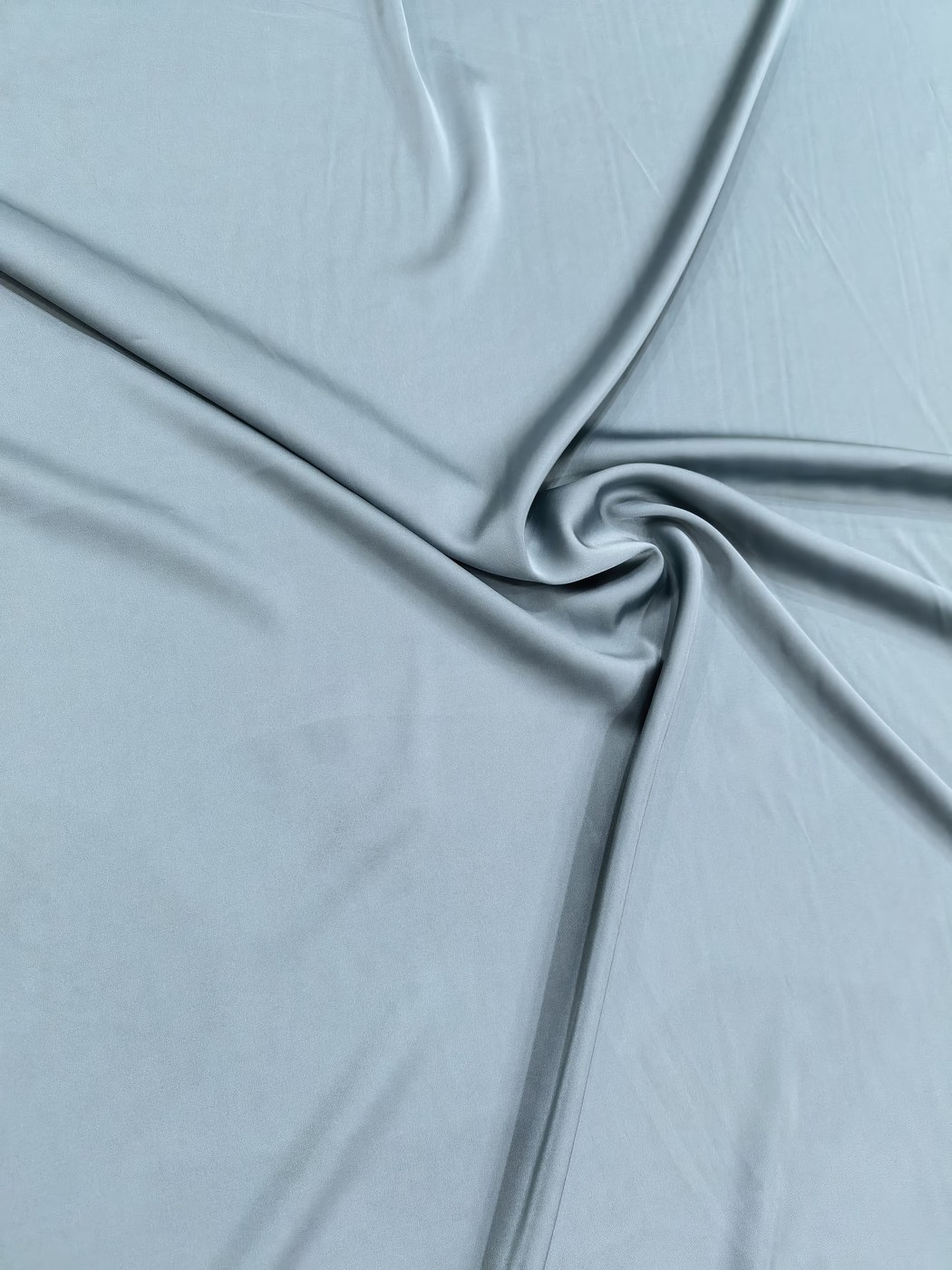
Table of Contents
- Introduction
- What 96/4 Stretch Satin Actually Is
- Why 98 GSM Decides the Garment
- Luster Direction: The Defect That Looks Like Dyeing
- What 4% Elastane Really Does, and How to Test It
- Bias Cut: Where the Fabric Grows After Cutting
- Seams, Needles and the Two Lines That Must Not Stretch
- Pressing: The Step That Permanently Kills the Sheen
- Shrinkage, Care Claims and the Label
- Specifying MJ 22126 on a Purchase Order
- A 20-Minute Receiving Check
- Frequently Asked Questions
Introduction
Most satin complaints that reach a mill are not about the satin. They are about the four per cent. A rigid polyester satin is a predictable cloth: you cut it, you sew it, it stays where you put it. Add 4% spandex and the same cloth starts behaving like a different material in four specific places – how it reflects light when panels are cut in different directions, how it comes back after being stretched, how much it grows on the bias, and how it reacts to an iron.
This guide is written for buyers and product developers specifying a lightweight stretch satin for dresses, slips, blouses and loungewear. The reference cloth throughout is MJ 22126: 96% polyester, 4% spandex, 98 GSM, 150 cm, woven satin, stock colours shipping in 7-10 days. Every number below is the number on our own product page, not a rounded industry average, and every defect described is one we have argued about with customers and fixed in cutting rooms.
If you are choosing between a rigid satin and a stretch satin, read the weight section first; if you have already chosen stretch satin and the problem is in production, read the luster and bias sections, which cause most of the disputes that reach the mill after bulk delivery.
What 96/4 Stretch Satin Actually Is
Satin is a weave, not a fibre. Three or more warp ends float over one weft pick, which is why the face is smooth, reflective and slightly fragile against abrasion, while the back is dull and structurally sound. The shine comes from filament yarn lying flat and parallel in long floats; anything that disturbs those floats – a thick weft, a coarse reed, a rough needle – shows immediately on the face.
In a stretch satin, the stretch almost always enters through the weft. The warp stays as fine filament polyester to preserve the float and the luster, and the weft carries a spandex core, either bare or wrapped. That asymmetry matters: the cloth stretches across the width far more readily than along the length. A buyer who assumes two-way stretch because the word “stretch” appears on the spec sheet will plan a cut that the fabric cannot deliver.
The 96/4 ratio itself is a working compromise, not a magic number. Below roughly 3% elastane the recovery after wear becomes unreliable on light weights; above roughly 6% the cloth begins to feel elastic rather than silky and the face loses some of its crisp reflection. Four per cent on a 98 GSM cloth gives a garment that moves with the body, keeps a bias-cut slip from clinging, and still reads as satin rather than as a stretch fabric. If your design needs more give than that, the honest answer is usually a different cloth and a different construction, not more elastane.
Why 98 GSM Decides the Garment
Buyers tend to choose satin by colour card and price, then discover the weight problem at sampling. Weight is what decides which garments the cloth can physically make. The table below is the range we work in daily; the bands are not marketing categories, they are the points where the cloth stops doing what the design needs.
| Weight | What the cloth does | Garments that work | Where it fails |
|---|---|---|---|
| 60-80 GSM | Very fluid, semi-sheer against light, seams can telegraph | Lingerie, linings, scarves, overlay panels | Any garment that must hold a line or hide a seam allowance |
| 90-105 GSM | Fluid with body; hangs in soft folds; holds a bias without collapsing | Bias slip dresses, camisoles, blouses, robes, wide-leg trousers | Structured collars, corset panels, tailored jackets |
| 120-150 GSM | Heavier drape, more opacity, firmer hand | Dresses with seams that must stay flat, simple jackets, skirts | Fine gathers, narrow bias strips, gathered waistbands |
| 180 GSM and up | Structured, near-upholstery hand | Occasion coats, structured bodices, home textiles | Anything that needs to move; bias cut |
At 98 GSM the cloth sits in the middle band, which is why it suits the slip-dress family so well and why it will not rescue a design that needs structure. The practical test is a 50 cm square held by one corner: at 98 GSM it should fall into narrow vertical folds within about 10 cm of the corner and keep falling. If it drops straight and stiff, the weight is above the band; if it flares and floats like chiffon, it is below.
Opacity is the second consideration at this weight. A 98 GSM satin in a pale colour is not opaque under strong backlight. For a pale bias slip, either line the body or accept that the garment is designed to be seen against skin. This is a design decision, not a defect, but it must be made before bulk, because at 98 GSM there is no finishing trick that adds opacity without changing the hand.
Luster Direction: The Defect That Looks Like Dyeing
This is the single most common stretch satin complaint, and almost never a dyeing fault. Satin reflects light directionally: the floats lie in one direction, so the face looks lighter when the light travels along the floats and darker when it travels across them. Turn a piece of satin 90 degrees on the table and the shade changes without any dye involved – that is the property of the weave.
The problem appears when a marker is laid out for yield rather than for direction. One panel gets rotated to save 15 cm of cloth, and on the finished garment – the multi-panel skirt, the princess-seamed bodice, the sleeve cut against the body – that panel reads as a different shade from its neighbour. Under showroom lighting it can look like a dye lot mismatch across a garment made from one roll of one dye lot.
Three controls prevent it, and all three belong on the purchase order rather than in the cutting room’s memory:
- One-way cutting. Every pattern piece is cut with the same orientation, nap-line marked on the marker. Yield drops; the garment matches. For satin, the yield drop is the cost of a saleable garment.
- Roll-end direction marking. If the mill’s rolls are wound face-in on some rolls and face-out on others, the cutting room must know which way is “up” before laying. We mark the face direction at the roll end on request.
- Directional light test at approval. Approve the strike-off or the first sample by walking around it, not by looking at it from one position. A panel that changes shade more than its neighbours is a cutting problem already baked in.
Where the design genuinely wants a reversible or contrasted effect – a two-tone wrap skirt, a panel turned deliberately – the effect has to be drawn and approved as a design line, with the panel direction specified. Unspecified contrast is a defect; specified contrast is a feature. The difference is a sentence in the tech pack.
What 4% Elastane Really Does, and How to Test It
Elastane is not there to make the garment tight. On a 98 GSM satin it does three quieter jobs: it lets a bias-cut slip follow the body without pulling the seams, it helps the cloth return to shape after sitting, and it reduces the creasing that a rigid satin shows after an hour in a chair.
Recovery is the number that matters, and it is the number least often quoted. Stretch percentage tells you how far the cloth goes; recovery tells you whether it comes back. A cloth that stretches 25% and recovers 90% is a better garment cloth than one that stretches 35% and recovers 75%. In practice, for a 98 GSM polyester satin with 4% elastane, expect most of a moderate stretch to return within a minute or two of release, with a small residual that grows with wear time and heat.
The bench test we recommend takes ten minutes and needs no equipment:
- Cut two 5 cm × 20 cm strips, one along the warp and one along the weft.
- Mark 15 cm, stretch to 18 cm (20%), hold for 60 seconds.
- Release on a flat surface, wait 60 seconds, measure again.
- Record residual growth. Under 5% is normal for this weight and blend; over 5% on a weft strip asks a question about the spandex content or the heat-setting.
- Repeat after one domestic wash at 30°C. Recovery that drops noticeably after washing points at heat-setting rather than at the fibre.
Two practical consequences follow. First, garment sampling must include a worn test, not only a fit test: a fit model standing still will not reveal seat bagging. Second, if the garment is designed for all-day wear – office dresses, travel, uniforms – specify a heat-set finish on the bulk and confirm it on the mill’s finishing record, because heat-setting is what locks the recovery into the cloth.
Bias Cut: Where the Fabric Grows After Cutting
A bias-cut panel is cut at 45 degrees to the warp and weft, which means no yarn in the panel is doing its normal job. The cloth elongates under its own weight, and with elastane in the weft it elongates more than a rigid satin, not less. This is not a fault; it is why bias slips drape the way they do. It is also why a hem cut at the cutting table is not the hem the customer receives.
The working rule is to let the garment hang before the final hem. In production that means 24 hours on a hanger, minimum, in a warm room if possible; for long dresses, longer. The hem is then levelled on the hanging garment. Skipping this step produces the classic uneven bias hem that appears only after a week on a rail, and no amount of pressing hides it, because the fabric has already moved.
Cutting also needs to allow for the movement before it happens. Add length at the cutting stage on bias panels – how much depends on the garment length and the cloth, and should be set from the sample rather than from a table – then remove it at hemming. For a 98 GSM stretch satin slip, the difference between the cut length and the finished length is measurable in centimetres, not millimetres.
One more caution for bias work: the cloth grows in the direction of gravity, which means a bias panel also widens slightly as it hangs. A fitted bias dress that measures correctly at the cutting table can be loose at the waist by the fitting. Treat the first sample of any new bias block as a measurement exercise and record how much each direction moved; that record is worth more than the sample itself.
Seams, Needles and the Two Lines That Must Not Stretch
Stretch satin is sewn like a woven, with two exceptions. The face marks permanently, and two seams must not stretch even though the cloth will. Everything else is ordinary satin practice: fine thread, moderate tension, and a test seam before the first production seam.
Needles and stitches. Use a 75-90 stretch or ballpoint needle. A sharp needle on a fine filament satin can cut yarns and leave holes that remain after the seam is removed – on a light satin those holes are unrecoverable. Polyester thread, fine count. A 2.5 mm stitch length is the usual starting point; side seams and any seam that must move with the body take a narrow zigzag or a built-in stretch stitch, and every seam is tested on a scrap of the actual bulk cloth, not on a sample-room leftover.
The two seams that must not stretch are the neckline and the shoulder. Both are cut on a curve or on the bias, both hang under the weight of the garment, and both will grow if left alone. Stabilise them with stay tape or clear elastic before sewing, not after. A stretched-out neckline on a bias slip is not correctable at the finishing stage.
Seam finish. Stretch satin frays. Overlock is the production answer; a French seam is the clean answer for unlined garments and is practical at this weight because the cloth is thin enough to fold twice without bulk. Whichever is used, the finish must be consistent across the order: a garment with one French seam and three overlocked seams reads as a sample, not as production.
Slippage and puckering. The smooth face slides; pins leave marks in the seam allowance only; clips or basting are safer. Puckering is usually feed-related rather than tension-related – check presser-foot pressure and consider a walking foot before adjusting tension, because a tension change that removes one pucker often creates a pull along the seam.
Pressing: The Step That Permanently Kills the Sheen
Heat is where stretch satin differs most from rigid satin. A rigid polyester satin can take a moderate iron on the reverse with care. A stretch satin cannot take direct heat on the face at all, and the damage is permanent in two ways: the elastane softens and loses recovery, and the filament face takes a shine or a flattening that no finishing step can restore.
Rules that hold in every sample room we have worked with: low temperature, pressing cloth always, work from the reverse, keep the iron moving, and never let steam sit in one place. Seams are pressed open with a cloth, not ironed flat. Where a garment needs a sharp edge – a collar, a cuff, a waistband – that edge is built with interlining and a clapper, not with heat and pressure on the satin face.
The commercial consequence is worth stating plainly: pressing damage is not a fabric claim, it is a process claim, and it usually appears after the goods have left the sewing room. If your factory has not sewn stretch satin before, ask for a pressing trial on offcuts as part of the pre-production meeting, and photograph the result. It is a five-minute step that prevents a whole delivery argument.
Shrinkage, Care Claims and the Label
Polyester is dimensionally stable, so the shrinkage story on a stretch satin is shorter than on a cotton or a viscose. What moves is the weave, relaxing on first wetting, and the elastane, responding to heat. For a 98 GSM stretch satin, allow 2-4% on the first domestic wash. If the garment is designed to be washed rather than dry cleaned, specify a pre-shrunk or heat-set bulk and confirm the figure on the mill’s shrinkage report rather than accepting a generic number.
Care instructions should be written for the weakest component, which is the elastane and the filament face, not the polyester. A defensible label for this cloth reads: machine wash cold or at 30°C on a delicate cycle, mild detergent, no bleach, do not tumble dry, cool iron on the reverse with a cloth, wash inside out. If the garment is dry-clean only, say so, but note that a polyester stretch satin usually does not need it – an unnecessary dry-clean instruction is a cost transferred to the customer.
Two labelling cautions. First, fibre content must reflect the blend as tested, not as ordered; a 96/4 blend declared as 100% polyester is a compliance problem in most markets. Second, do not transfer a mill’s certification claim onto a garment label without a certificate that covers the actual production lot. Ask for the certificate number and the scope, and put the number in the file.
Specifying MJ 22126 on a Purchase Order
A satin purchase order that survives production has six lines that cannot be left to conversation: composition, weight, width, colour reference, finish and packing. Everything else – price, lead time, payment – hangs off those six. The table below is the specification we hold for MJ 22126; copy it into your PO and you remove most of the ambiguity that causes claims.
| Line | Specification | Why it matters |
|---|---|---|
| Composition | 96% polyester, 4% spandex | Declared on the label; drives recovery and hand |
| Weight | 98 GSM (nominal, ±5%) | Decides drape, opacity and which garments are possible |
| Width | 150 cm usable | Marker efficiency; bias panels need more width than straight panels |
| Colour | Stock card reference, or lab dip approved under D65 | Prevents “same as last time” arguments across dye lots |
| Finish | Heat-set, soft hand, no surface coating | Locks recovery; avoids the stiff, papery hand some finishes give |
| Packing | Rolled on tube, poly-bagged, roll-end marked for face direction | Protects the face in transit; tells the cutting room which way is up |
Commercial terms for this cloth: minimum 200 metres per colour, FOB China port at USD 1.30 per metre from 200 metres, USD 1.23 at 1,000 metres, USD 1.15 at 2,000 metres and above, depending on colour and packing. Stock colours ship in 7-10 days; custom colours run 15-30 days. T/T 30/70 is standard, with larger orders by arrangement. CFR and CIF are quoted on request.
Two lines buyers often omit and later regret: the acceptable colour tolerance, expressed as a grey scale rating against the approved standard, and the roll-length tolerance, because a marker planned on 50 m rolls behaves differently on 30 m rolls. Neither costs anything to state. Both save a week of argument.
A 20-Minute Receiving Check
Goods inspection on stretch satin is not a laboratory exercise. Twenty minutes with a metre of bench, a light and a tape measure catches the defects that actually reach the customer. The check below is the one we recommend to buyers receiving their first bulk delivery of this cloth.
| Symptom | Likely cause | What to check |
|---|---|---|
| Panel reads a different shade on the garment | Luster direction, not dye | Turn each panel 90° under the same light; if the shade follows the rotation, it is direction |
| Holes remain after unpicking a seam | Sharp or oversized needle | Needle type and size on the machine record; test-sew a scrap |
| Ripples following the stitch line | Feed or presser-foot pressure | Change one variable at a time: pressure, then stitch length, then tension |
| Seam opens beside intact stitches | Seam slippage at low seam allowance | Measure allowance; satin needs more than the minimum for the stress area |
| Local shine or a flat patch | Pressing heat | Pressing trial on offcuts; low heat, cloth barrier, reverse side |
| Uneven hem after hanging | Bias growth, hem cut too early | Hang 24 h before levelling; record the movement on the sample |
| Seat or knee bagging after wear | Recovery below expectation | 20% stretch / 60 s hold / 60 s release test on a weft strip |
Record the results against the roll numbers, not against the delivery as a whole. A single roll that behaves differently from its neighbours is either a different dye lot or a different finishing pass, and both are worth knowing before the roll is cut rather than after the garment is sewn.
Frequently Asked Questions
What does 96/4 mean on a satin specification?
It is fibre content by weight: 96% polyester and 4% spandex (elastane). The polyester forms the satin face and carries the luster; the 4% elastane supplies stretch and recovery. Ask for the test method behind any stretch figure, because the same fabric can be quoted as 15%, 25% or 30% elongation depending on the standard used.
Is 98 GSM too light for a slip dress?
No. 98 GSM is the normal working weight for bias-cut slip dresses, camisoles and robes. What it will not do is carry a structured silhouette. If the design needs a stand collar, a corset panel or a jacket body, move up to a 130-150 GSM satin or change construction.
Why do two panels of the same satin look different in colour?
Because satin reflects light directionally. A panel cut in the opposite direction to its neighbour can read lighter or darker under the same light while both come from the same roll. It is a cutting orientation issue, not a dye fault. Cut every panel the same way and the apparent mismatch disappears.
How much does 4% elastane recover after wear?
On a 98 GSM polyester satin, 4% elastane typically recovers most of a moderate stretch within minutes of release, but a garment worn while seated for hours will show temporary bagging at the seat and knees. Test it: stretch a swatch 20%, hold one minute, release one minute, then measure. More than 5% residual growth is a recovery problem worth raising with the mill.
Does stretch satin shrink, and how much should a buyer allow?
Polyester itself is dimensionally stable; the movement you see comes from relaxation of the weave and from heat. Allow 2-4% on the first domestic wash for a 98 GSM stretch satin, and confirm against the mill shrinkage report rather than a generic figure.
Can stretch satin be ironed?
Yes, but not with the iron touching the face. Use a low setting with a pressing cloth, work from the reverse, and never hold heat in one place. Direct high heat damages the elastane and can leave a permanent shine or flatten the satin face, and neither is recoverable in finishing.
What is the minimum order and lead time?
For MJ 22126 the minimum is 200 metres per colour. Stock colours ship in 7-10 days; custom colours run 15-30 days depending on dyeing load. FOB pricing steps down with volume from 200 metres to 2,000 metres and above.
Where to Go From Here
If you are specifying a stretch satin for a dress or slip programme, send the garment type, the target weight and the colour reference and we will answer with the closest stock option, the swatch lead time and a landed-cost indication. If your question is about a satin that has already been sewn and is showing one of the symptoms above, send a photograph of the seam or panel alongside the cloth reference – in most cases the symptom identifies the cause before anyone touches the goods.
Related reading: the MJ 22126 product page for the full specification and colour card; crinkle satin care if texture retention rather than stretch is your question; and the pearl crinkle satin buying guide for weight, MOQ and supplier verification on the textured satin line.
Send us the garment type and target weight – we will come back with the stock colour closest to your reference and the sampling options.