Velvet for Jalabiya: Weight Windows for Egypt and the Gulf
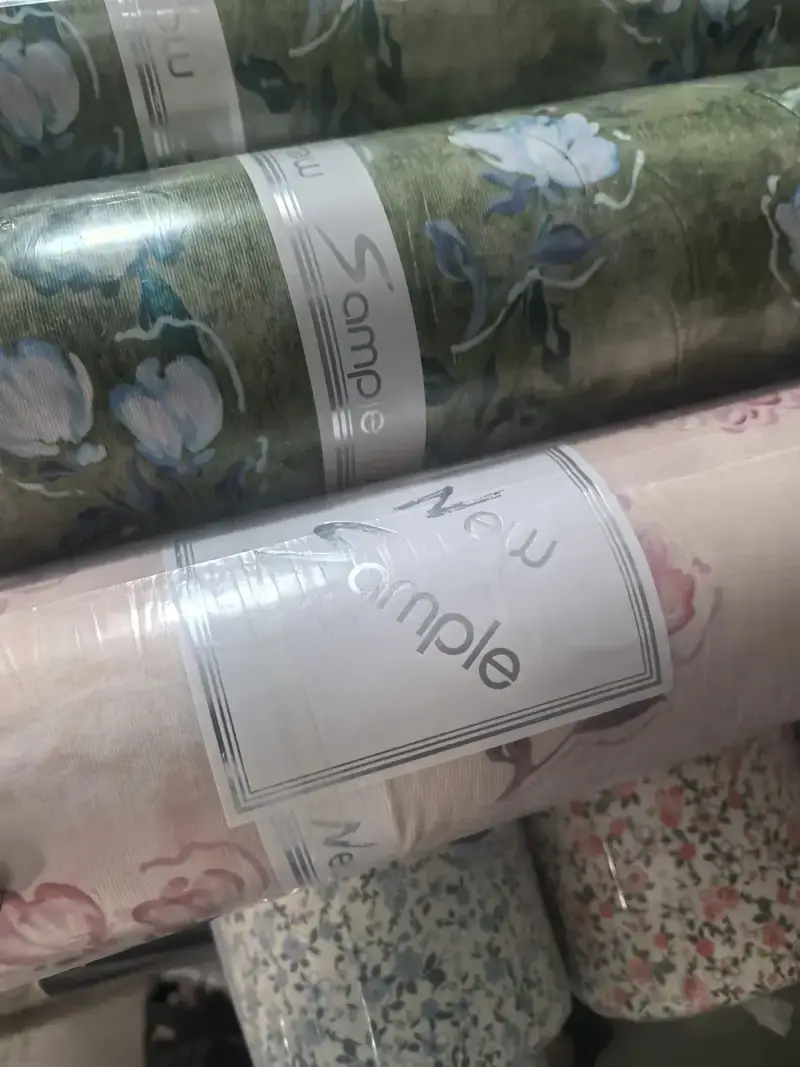
Jalabiya is the one garment where velvet competes with cotton rather than with satin. The buyer is not paying a luxury premium; she is replacing a winter house dress that used to be made from kastor, and she wants what she got from cotton: warmth without weight, a loose cut that moves, and a garment that survives the washing machine.
That changes the specification. Abaya velvet is bought for drape under a black over-garment, kaftan velvet for gold thread and a ceremonial silhouette. Jalabiya velvet is bought for a four-metre body hanging free from a dropped shoulder, in a house where the machine runs at 40 degrees and nobody irons a pile.
Why velvet enters jalabiya at all
Velvet enters jalabiya as a winter substitute, not as a default. Nobody in Cairo wears velvet in June and nobody in Riyadh wears it in August. The season is short: late November through February, when Delta nights sit between 8 and 13 degrees and the humidity makes cotton feel cold against the skin rather than cool.
In that window velvet does something cotton cannot. A 240 GSM short-pile traps still air against the body while weighing less than a comparable brushed flannel, and it holds colour through a winter without the grey cast that repeated washing puts on dark cotton.
The trade-off is the whole subject of this page. Velvet is warmer per gram but heavier per metre, it holds static in dry air, and its pile marks wherever the garment is folded. A jalabiya is folded on a shelf, sat on, and washed weekly. Those three habits are exactly what velvet handles worst.
So the question is never whether velvet is good for jalabiya. It is which velvet, at what weight, finished how, survives the way this garment is actually used.
What kastor was, and the gap it left
Kastor is not velvet, and confusing the two is the most common mistake in this category. Kastor is a fine Egyptian cotton cloth woven from locally grown long-staple cotton, and it was the national house-dress fabric from the 1950s into the 1980s. It was distributed on the ration card alongside oil and sugar, and school uniforms were cut from it.
What happened to it is a supply story, not a taste story. Cheap imported polyester knits arrived, cotton prices moved, and the mills that wove kastor narrowed their range. By the 1990s the fabric a grandmother wore had become a specialty item.
The replacement came in three forms. Brushed cotton flannel took the low end, polyester fleece took the volume end, and velvet took the middle: the buyer who wanted the dress to look like something at a price the neighbourhood tailor could work with. That tells a supplier what the buyer is measuring against, and it is not a silk kaftan. It is a flannel that costs less and washes harder.
Egypt and the Gulf want different cloth
Egypt and the Gulf buy the same category for opposite reasons, and one weight will not serve both. The Egyptian winter galabeya is a house garment: wide through the body, dropped shoulder, no waist shaping, hem at the ankle. It is worn over a nightdress, sat in, cooked in, washed weekly. The buyer wants softness and a heavy fall.
The Gulf jalabiya is closer to a hostess gown. Still loose, but the shoulder is set, the sleeve is shaped, and the neckline or cuff often carries embroidery. It is worn for receiving guests at home and for Ramadan evenings. The buyer wants the garment to hold a line, not to collapse.
| Attribute | Egyptian winter galabeya | Gulf hostess jalabiya | What it means for the cloth |
|---|---|---|---|
| Silhouette | Wide, dropped shoulder, no shaping | Loose but set shoulder, shaped sleeve | Egypt needs fall; Gulf needs a held line |
| Pile height | 1.5 to 1.8 mm, longer and softer | 1.0 to 1.3 mm, shorter and denser | Pile height sets both drape and mark resistance |
| Typical weight | 230 to 260 GSM | 220 to 245 GSM | Egypt carries more weight without looking stiff |
| Decoration | Printed or plain, minimal embroidery | Neckline and cuff embroidery, sometimes beading | Gulf cloth must carry thread without sinking |
Softness and fall push toward a longer pile at lower density; shape and line push toward a shorter pile at higher density. A mill that ships one quality to both markets will be wrong in one of them. Ask which of the two the buyer is making before you quote: one question, and it decides pile height, finishing route, and whether the order needs a backing.
The weight window: 220 to 260 GSM
Jalabiya velvet sits 20 to 40 GSM below abaya velvet, and the reason is the cut. An abaya hangs in a narrow column, so heavier cloth reads as quality. A jalabiya falls from a dropped shoulder across four metres of body, so heavier cloth reads as a coat.
Below about 220 GSM the cloth stops being a winter fabric: it goes limp, the pile flattens at the shelf fold, and the body shows the outline of whatever is worn underneath when the wearer stands in front of a window. Above about 260 GSM the garment stands away at the hem and the sleeve drags on the wrist.
| GSM | Hand and fall | Where it works | Where it fails |
|---|---|---|---|
| 200 to 220 | Limp, very soft, moves a lot | Summer house robe, layering piece | Not a winter garment; shows body outline in backlight |
| 220 to 240 | Soft with a visible fall | Egyptian house galabeya, printed winter line | Marks at the shelf fold after two weeks |
| 240 to 260 | Full hand, clean fall, holds a line | Gulf hostess jalabiya, embroidered neckline | Stands away at the hem if the cut is too narrow |
| 260 to 290 | Substantial, close to abaya weight | Heavy ceremonial robe, coat-style jalabiya | Too stiff for a dropped shoulder; sleeve drags |
Weigh a 10 by 10 cm swatch on a letter scale before you approve anything. A 250 GSM cloth gives 2.5 grams on that square, and if it reads 2.2 or 2.9 you are not buying the weight the mill quoted. Do it on three swatches from different points across the width, because a velvet that reads correctly at the selvedge can be light in the middle.
Drape on a loose cut is the real constraint
On a loose cut, drape stops being a preference and becomes a structural requirement. A fitted garment can be held in shape by seams. A jalabiya has almost no seams to work with: two sides, a shoulder, a sleeve, and the rest is cloth falling under its own weight.
Pile height drives this more than weight does. Two cloths at the same 250 GSM behave completely differently depending on whether the pile stands at 1.2 mm or 1.8 mm. The longer pile gives a softer, heavier fall and a deeper colour, because more fibre catches light at an angle. The shorter pile gives a cleaner line and recovers its shape after sitting.
There is a third variable buyers rarely ask about: pile density, not just height. A dense short pile can feel fuller than a loose long pile at the same weight, because more fibre stands upright per square centimetre. Density is what makes velvet resist crushing at the fold, and it is the number a mill will not volunteer.
Test it the way the garment will be used. Hold a one-metre length at one end and let it hang. Then gather it in your fist the way a seated wearer gathers the skirt, hold thirty seconds, release, and watch the creases. Good density opens back out within minutes; poor density keeps the fist marks and will keep the shelf marks too. For why one panel can read darker than its neighbour on the same roll, see our pile direction guide.
Static in dry air, and the lining decision
Static is the failure that gets returned, not the failure that gets inspected. In a Gulf winter the indoor air sits below 40 percent relative humidity for weeks, and polyester velvet in that air builds charge every time the wearer stands up from a sofa. The garment clings to the legs, the hem lifts, and the cloth attracts every particle of dust in the room.
The mechanism is simple. Polyester does not absorb moisture, so charge has nowhere to go, and the denser the pile the more surface there is to hold it. This is why a heavier velvet can feel worse in static terms than a lighter one even though it feels better in the hand.
Three routes, at rising cost. An anti-static finish at the mill is cheapest per metre and washes out over roughly fifteen to twenty home cycles. A conductive yarn woven into the ground is durable and adds cost to the greige. A cellulosic lining, viscose or cupro, solves it at garment level. For a house galabeya the lining is usually wrong, because the garment already sits over a nightdress; for a Gulf hostess jalabiya it is often right.
Test in the room, not the office. Rub a swatch briskly on a wool sleeve for ten seconds and hold it against a painted wall. If it sticks and stays, the finish is not adequate for dry-climate retail. Do it on a dry day; the same swatch will pass in humid weather and fail in the buyer's winter.
Route choice is a costing decision before it is a technical one: a finish that washes out in fifteen cycles reads as the lower-cost route per metre until the returns arrive, while a conductive yarn in the ground costs at the greige stage and lasts the garment out. The three routes, their wash-cycle arithmetic and the wall test that settles the argument on the spot are worked through in static in velvet: causes, anti-static finishing and buyer tips.
Pilling at the knee and the elbow
Jalabiya pills in two places and neither is the body. The knee takes the load when the wearer sits on the floor, which is normal in a house garment. The elbow takes the load when the wearer leans on a table. The body panel, which is what a buyer usually inspects, almost never pills at all.
That mismatch is why first orders pass inspection and come back as complaints. The inspector looks at the front panel, sees a clean surface, and signs off. Six weeks later the customer reports bobbles at the knee and the mill has no answer, because the cloth was never tested at the point of use.
Pilling comes from short fibres working loose from the pile and tangling. Longer staple fibre resists it, tighter pile density resists it, a properly set finish resists it. A brushed or sanded finish accelerates it, because brushing breaks fibre ends on purpose. A peached velvet at a low price is softness bought with pilling risk.
Run a rub test at the point of use rather than trusting the standard abrasion figure. Twenty thousand Martindale cycles on a flat specimen tells you about the body panel. Two hundred strokes of the swatch against denim, done at the knee position of a folded garment, tells you what the customer will actually see. The second test is cruder and much closer to the truth.
Sewing a loose velvet robe
A loose velvet robe is a long-seam garment, and long seams on pile are where a cutting room loses money. A jalabiya body seam can run 140 cm from hem to sleeve. Over that distance two layers of velvet shift against each other by several millimetres unless the feed is controlled, and a shifted seam on pile cannot be pressed back into place.
The fix is mechanical, not skilled. A walking foot, or a machine with differential feed set to gather slightly, keeps both plies moving together. A standard drop feed lets the bottom ply run ahead, and the seam puckers at roughly one millimetre per ten centimetres, which is invisible on the table and obvious on the body.
Cut single layer, pile down, with the nap running the same direction on every panel. Cutting two plies at once on velvet is a false economy: the top ply slides, the panels come out mismatched, and the mismatch shows as a shade difference on the finished garment.
Use an 80/12 Microtex needle and a stitch length of 2.5 to 3 mm. A universal needle cuts pile fibres as it enters, and those cut fibres are the beginning of a pill. Press from the back on a needle board, steam only, no pressure. Baste the shoulder and sleeve head by hand before machining: those two seams carry the whole weight of a four-metre garment and cannot be re-sewn once the pile is marked.
What survives machine washing
Assume the machine, because the garment will meet one. A jalabiya is a house dress. It gets washed after one or two wears, in a domestic machine, at whatever setting the household uses. A velvet that requires dry cleaning is not a jalabiya fabric, whatever its hand feels like in the showroom.
What survives is a short dense pile with a heat-set finish and a high-fastness dye. What does not survive is a long loose pile, a surface-brushed finish, and a dye never tested at 40 degrees. The failure shows as flattening at the fold, a grey cast on dark shades, and pile loss at the seam allowance.
| Construction | Pile after 20 washes | Colour after 20 washes | Verdict for jalabiya |
|---|---|---|---|
| Short dense pile, heat-set, reactive dye | Stands, slight softening at fold | Holds within one grey scale step | Works; specify this |
| Short pile, disperse dye, no heat set | Flattens at fold lines | Visible shift on black and navy | Marginal; ask for wash test data |
| Long loose pile, brushed finish | Mats at knee and elbow | Fades unevenly at high points | Fails; not a house garment |
| Any pile with a softener top finish | Good for 5 washes, then collapses | Softener yellows pale shades | Fails; the softness is temporary |
Ask for a wash test at 40 degrees, not 30, on the darkest shade in the range, because dark shades show the shift first. Ask for the pile to be assessed by hand after drying, not by photograph.
Metres per garment, and a brief you can send
A jalabiya consumes more cloth than an abaya and less than a kaftan set, and the difference comes entirely from the cut. At 155 to 160 cm usable width, an Egyptian wide cut takes 3.8 to 4.4 running metres; a narrow Gulf cut with a set sleeve takes 3.4 to 3.9 metres, because the sleeve comes from the body offcut.
Two factors push consumption up and both are easy to miss at quoting stage. A large print or a directional pile means every panel must be cut the same way up. An embroidered neckline panel needs a separate cut so the motif sits straight, which adds 0.3 to 0.5 metres. Draw the marker before you quote: a 4.1 metre estimate that becomes 4.6 at cutting is a margin problem on a house-dress price. For the arithmetic across panel widths, see our cutting yield guide.
Then send the brief as a list, not a paragraph, because a mill quotes against the list and ignores the paragraph. State the market first: Egyptian house galabeya and Gulf hostess jalabiya are different cloths, and a mill that does not know which you are making will quote the middle and satisfy neither.
State weight as a window with a tolerance. A 240 to 255 GSM window with 3 percent tolerance is quotable; a request for 250 GSM invites cloth that measures 235 at the selvedge and 262 in the middle. State the finish explicitly, then state the test you will run on receipt, because a mill that knows the test will finish for the test. Wash at 40 degrees, rub at the knee, hold the swatch against a wall. Finally, ask for usable width in writing.
Frequently Asked Questions
Is velvet right for a jalabiya?
Yes for the winter house garment, and not for anything else. It replaces brushed cotton flannel and the old kastor dress in the two cold months, when a wide loose cut needs warmth without weight. It is not a summer cloth and not a good choice where the garment is washed every two days.
What is kastor, and is it velvet?
Kastor is a fine Egyptian cotton cloth, not a velvet. It was woven from locally grown long-staple cotton and was the national house-dress fabric from the 1950s into the 1980s, distributed on the ration card. Velvet took part of the position kastor left behind, but it is a different fibre and a different hand.
What GSM velvet should I use for a winter galabeya?
220 to 260 GSM, with the Egyptian wide cut at the top of that window and the Gulf set-shoulder cut at the bottom. Below 220 the cloth goes limp and shows the body outline in backlight. Above 260 the garment stands away at the hem and the sleeve drags on the wrist.
Why does my velvet jalabiya cling to my legs?
Static, and it is a dry-air problem rather than a cloth defect. Polyester does not absorb moisture, so charge builds every time the wearer stands up, and a dense pile gives it more surface to hold. The fixes are an anti-static finish, a conductive yarn in the ground, or a cellulosic lining, in rising cost and durability.
How many metres of velvet does one jalabiya need?
3.8 to 4.4 running metres at 155 to 160 cm usable width for an Egyptian wide cut, and 3.4 to 3.9 metres for a narrow Gulf cut with a set sleeve. An embroidered neckline panel usually adds 0.3 to 0.5 metres, because the motif has to be cut straight on the body.
Can a velvet jalabiya be machine washed?
A short dense pile with a heat-set finish and a high-fastness dye can, at 40 degrees, inside out, in a mesh bag, dried flat in shade. A long loose pile, a brushed finish, or an untested dye will flatten at the fold and shift colour on dark shades within twenty washes. Ask for the wash test data first.
How do I stop the velvet marking where it folds on the shelf?
Two things, and they are separate. Choose a shorter pile at the same weight, because mark resistance comes from pile density rather than weight. Then test recovery before the order: fold a swatch pile to pile under a 2 kg weight for 24 hours, open it, wait ten minutes, and look at what remains.