Velvet Cutting Yield: 140 cm vs 160 cm, Width by Width
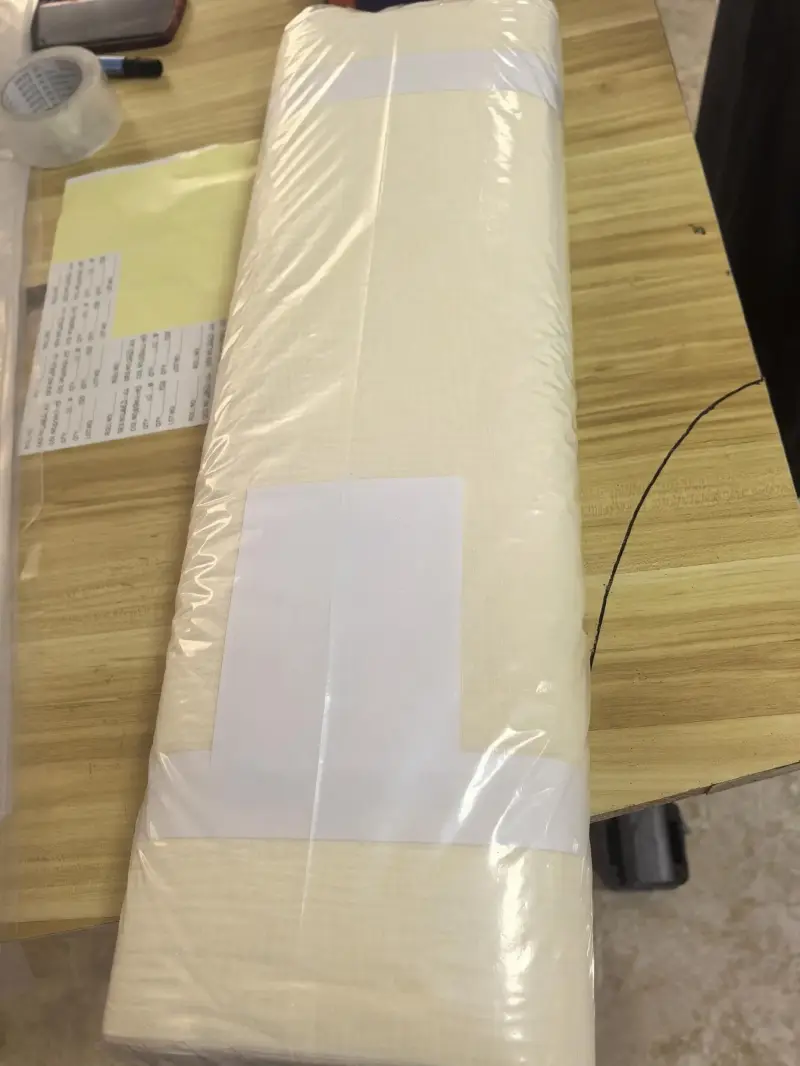
An 80 cm panel yields once from a 140 cm velvet roll and twice from a 160 cm roll. That is 1.00 m of cloth per panel against 0.50 m, at the same cutting cost. The difference is not visible on a specification sheet, because both rolls declare a usable width and neither declares a panel count. This page gives the count for every common panel width, the arithmetic behind it, and the one input — seam allowance — that can wipe the advantage out.
Table of Contents
- The Rule in One Line
- The Full Table, 15 Panel Widths
- Why Yield Percentage Misleads
- The Premium Decides the Ties
- Where Seam Allowance Breaks the Advantage
- When 160 cm Is Not a Choice
- Four Mistakes in Width Comparison
- Our Published Position
- Frequently Asked Questions
The Rule in One Line
Everything on this page comes from two divisions:
panels per metre = floor(usable width ÷ cut width)
metres per panel = 1 ÷ panels per metre
So the wider roll wins if and only if it fits an extra panel across:
floor(160 ÷ cut width) > floor(140 ÷ cut width)
Where the two floors are equal, the panel count is equal, the cloth consumed per panel is equal, and the cheaper roll is simply the one with the lower price per metre. That is the whole model. Table napkins, cushions, curtains and headscarves all run through it unchanged.
The Full Table, 15 Panel Widths
Cut width in the first column is the width of the piece you cut, not the finished size. Panels per metre is the count across the width, since one metre is the length unit. Waste is expressed as yield: how much of the roll face ends up in the garment.
| Cut width (cm) | 140 cm: panels / m | 140 cm: m per panel | 140 cm: yield | 160 cm: panels / m | 160 cm: m per panel | 160 cm: yield | Cheaper per panel |
|---|---|---|---|---|---|---|---|
| 45 | 3 | 0.333 m | 96.4% | 3 | 0.333 m | 84.4% | Tie |
| 50 | 2 | 0.500 m | 71.4% | 3 | 0.333 m | 93.8% | 160 |
| 55 | 2 | 0.500 m | 78.6% | 2 | 0.500 m | 68.8% | Tie |
| 60 | 2 | 0.500 m | 85.7% | 2 | 0.500 m | 75.0% | Tie |
| 65 | 2 | 0.500 m | 92.9% | 2 | 0.500 m | 81.2% | Tie |
| 70 | 2 | 0.500 m | 100.0% | 2 | 0.500 m | 87.5% | Tie |
| 75 | 1 | 1.000 m | 53.6% | 2 | 0.500 m | 93.8% | 160 |
| 80 | 1 | 1.000 m | 57.1% | 2 | 0.500 m | 100.0% | 160 |
| 90 | 1 | 1.000 m | 64.3% | 1 | 1.000 m | 56.2% | Tie |
| 100 | 1 | 1.000 m | 71.4% | 1 | 1.000 m | 62.5% | Tie |
| 110 | 1 | 1.000 m | 78.6% | 1 | 1.000 m | 68.8% | Tie |
| 120 | 1 | 1.000 m | 85.7% | 1 | 1.000 m | 75.0% | Tie |
| 130 | 1 | 1.000 m | 92.9% | 1 | 1.000 m | 81.2% | Tie |
| 140 | 1 | 1.000 m | 100.0% | 1 | 1.000 m | 87.5% | Tie |
| 160 | 0 | — | 0.0% | 1 | 1.000 m | 100.0% | 160 |
“Cheaper per panel” compares metres of cloth consumed per panel. It becomes a tie only if the two widths are quoted at the same price per metre — see the next section.
Why Yield Percentage Misleads
Take 70 cm, the width that catches people out. A 140 cm roll fits two 70 cm panels with nothing left over: 100% yield. A 160 cm roll also fits two, but leaves 20 cm of selvedge waste: 87.5% yield. On the yield column the narrow roll looks 12.5 points better.
Now the number the buyer actually pays: both roll two panels per metre, so both consume 0.50 m of cloth per panel. At the same price per metre, the panel costs exactly the same on either width. The 160 cm roll does not make the panel dearer; it makes the roll heavier to ship and leaves a strip nobody uses.
Yield percentage answers “how much of the roll face did I use”. The buyer's question is “how many metres did the panel eat”. Two different denominators, and the second one is the invoice. Use yield to judge waste, use metres per panel to judge cost.
The same trap runs the other way at 50 cm: 71.4% against 93.8% looks like a modest gap, but it is two panels against three — 0.500 m against 0.333 m per panel. A third of the cloth, on the same roll length. Percentage points understate big panel-count jumps and overstate small ones.
The Premium Decides the Ties
At the ten widths where both rolls fit the same number of panels, the decision comes down to how the 160 cm roll is priced:
- Priced in proportion to area (about 14% higher per metre): the 140 cm roll is about 12.5% cheaper per panel, because 140 ÷ 160 = 0.875. This is the usual case, since the wider roll carries proportionally more yarn for the same length.
- Priced the same per metre: the tie is genuine, and the wider roll costs you the waste strip and the freight volume for nothing.
So when a mill quotes both widths, ask on which basis: per metre, per kilogram, or per square metre. The same two prices are a tie on one basis and a 12.5% gap on another, and the answer changes the costing on ten of the fifteen widths in the table.
Where Seam Allowance Breaks the Advantage
Every number above is cut width. A finished size needs seam allowance on both sides — normally 1 to 1.5 cm per side on velvet, more for a double-folded hem. That pushes a finished 80 cm panel to a 83 cm cut.
At 83 cm the arithmetic changes completely: floor(140 ÷ 83) = 1 and floor(160 ÷ 83) = 1. The 160 cm roll no longer fits two panels, and the half-cloth saving disappears. The same happens to a finished 78 cm panel cut at 81 cm: both widths fit one.
This is the single most common costing error we see in incoming enquiries: a buyer compares widths on finished size, gets the answer for cut width, and orders the wrong width. Convert first, then count. Velvet makes the conversion more consequential than on flat cloth, because the pile runs one way and a panel cannot be flipped to squeeze it in.
When 160 cm Is Not a Choice
Between 141 and 160 cm of cut width there is nothing to weigh: a 140 cm roll yields zero panels. A 150 cm upholstery panel, a 160×160 square, a one-piece bed throw — these exist only on the wider loom. It is a capability question, not a cost question, and it is worth asking early: a supplier whose widest loom is 140 cm will quote the order as a seamed-up panel rather than tell you the width is unavailable.
Four Mistakes in Width Comparison
- Quoting by yield percentage. It measures roll utilisation, not metres per panel. Two widths with the same panel count have the same cost per panel whatever their yield says.
- Assuming wider is always cheaper. A 160 cm roll wins at four widths only; at the other eleven it either ties or loses by the width premium.
- Comparing prices on different bases. Per metre against per kilogram is not a comparison. Fix the basis before comparing.
- Forgetting seam allowance and pile direction. A finished 80 cm panel is an 83 cm cut, and at 83 cm the wider roll stops fitting two. This one line moves the answer more than any price negotiation.
Our Published Position
We weave velvet on 30 LENADO looms at Fengqiao, Zhuji, and quote burnout (devoré) velvet from $3.10/m. Same price from 300 m to 2000 m. Minimum order is 300 m per colour, and both the 140 cm and 160 cm widths are quoted per metre — so ask for the quote on your cut width, not your finished size, and we will return the panel count with it. FOB, with CFR or CIF on request.
Frequently Asked Questions
Q1: Is a 160 cm velvet roll always cheaper per panel than a 140 cm roll?
No. It is cheaper only where it fits an extra panel across — 50 cm, 75 cm, 80 cm, and any panel wider than 140 cm. At every other width both rolls fit the same number of panels, so the wider roll is the dearer one per panel.
Q2: Why does a 70 cm panel cost the same on both widths?
Because both rolls fit two 70 cm panels across one metre, so both consume 0.50 m of cloth per panel. The 160 cm roll shows a lower yield (87.5% against 100%) because it carries 20 cm of selvedge waste per width, but waste inside the roll does not change the cloth consumed per panel.
Q3: Which panel widths does a 140 cm roll win?
Every width where both rolls fit the same number of panels and the 160 cm roll costs more per metre. Priced in proportion to area — about 14% higher per metre — the 140 cm roll is about 12.5% cheaper per panel at those widths.
Q4: How much seam allowance should I add before comparing widths?
Allow 1 to 1.5 cm per side, so a finished 80 cm panel cuts at 82 to 84 cm. This matters: at 83 cm the 160 cm roll fits one panel, not two, and the advantage disappears. Convert finished size to cut width before running the panel count.
Q5: Does pile direction reduce velvet yield?
It does not change the arithmetic, but it removes an option. Velvet pile must run the same way on every panel, so panels cannot be nested head to tail to use the offcut. Yield comes from the width alone, which is why cut width and seam allowance decide the result.
Related Guides
- Burnout (Devoré) Velvet: Manufacturing & Sourcing Guide
- Woven vs Knitted Velvet: What Buyers Get Wrong
- Fabric Price Calculation & FOB Cost Breakdown
- Fabric MOQ & Payment Terms from China
- Velvet Storage: Pressure Marks & Packing
- FOB Shipping Terms for Fabric Importers
- How to Read a Fabric Specification Sheet
- Fabric Sourcing Timeline: Sample to Shipment
- Velvet Fabric Buying Guide: Burnout vs Solid-Dyed
- What GSM for Sofa Velvet? The Answer Is a Range
- Sourcing Velvet & Velour for Home Textiles and Apparel
Standards, Regulations and Data Sources Cited
The measurement methods and classification references behind the figures in this guide:
- ISO 3801:1977 — Mass per unit length and mass per unit area of woven fabrics — the reference method behind every g/m² figure, and therefore behind yarn cost per metre.
- ISO 2060 — Determination of linear density of yarn from packages — how yarn count is established, which is the input to yarn costing.
- ISO 7211-2 — Determination of number of threads per unit length — fabric sett, the other half of the yarn consumption calculation.
- General Administration of Customs of China — 海关总署 — the official source for export declarations and HS classification of pile fabrics under heading 5801.3.
- National Enterprise Credit Information Publicity System — 国家企业信用信息公示系统 — China's official registry for verifying a supplier's legal entity, registered capital and operating status.