On 28 November 2026 a Middle East buyer walked our Keqiao showroom and worked through the velvet rolls against the batch list. These are the six photos from that afternoon, and the eight checks that ran.
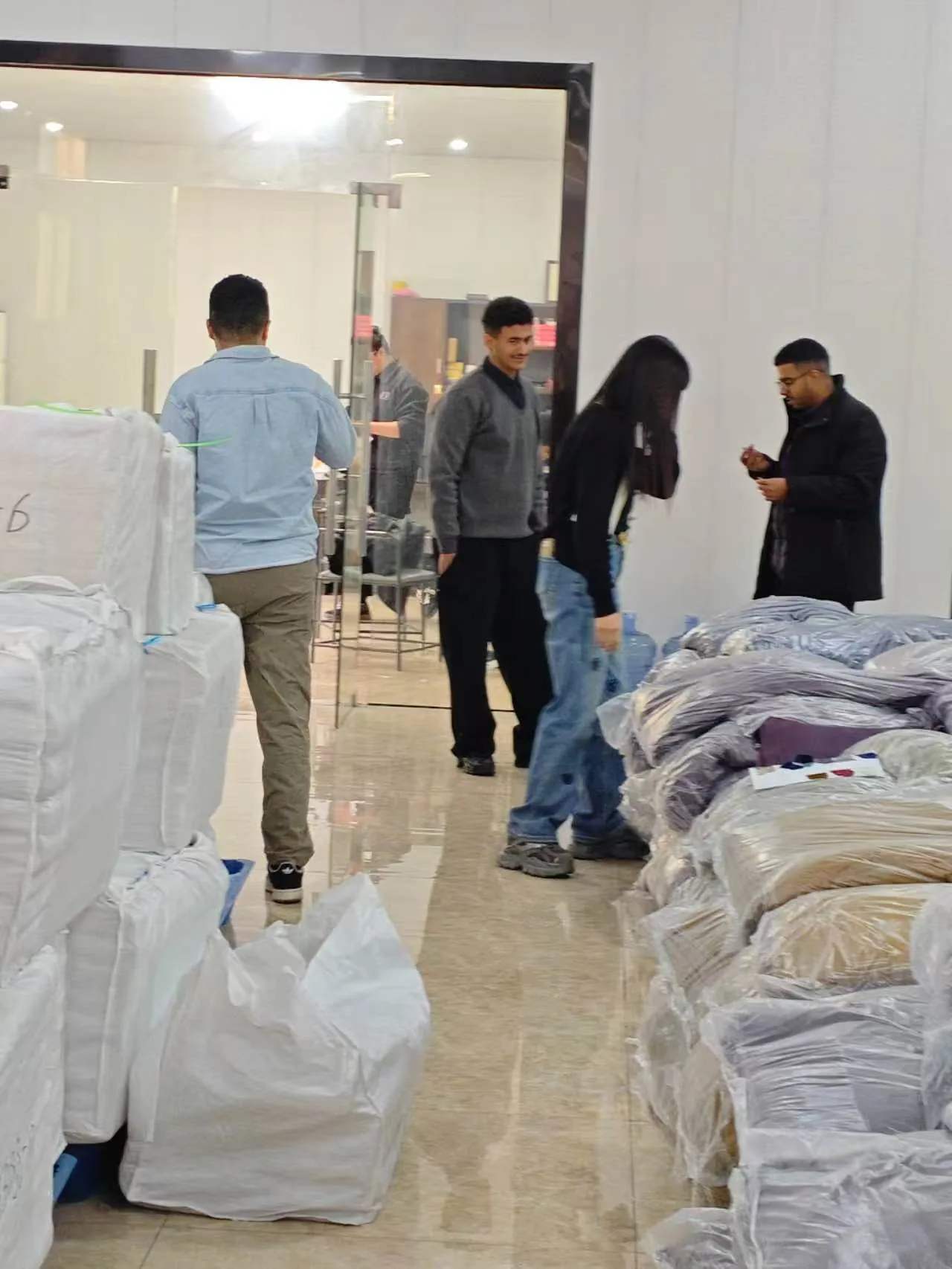
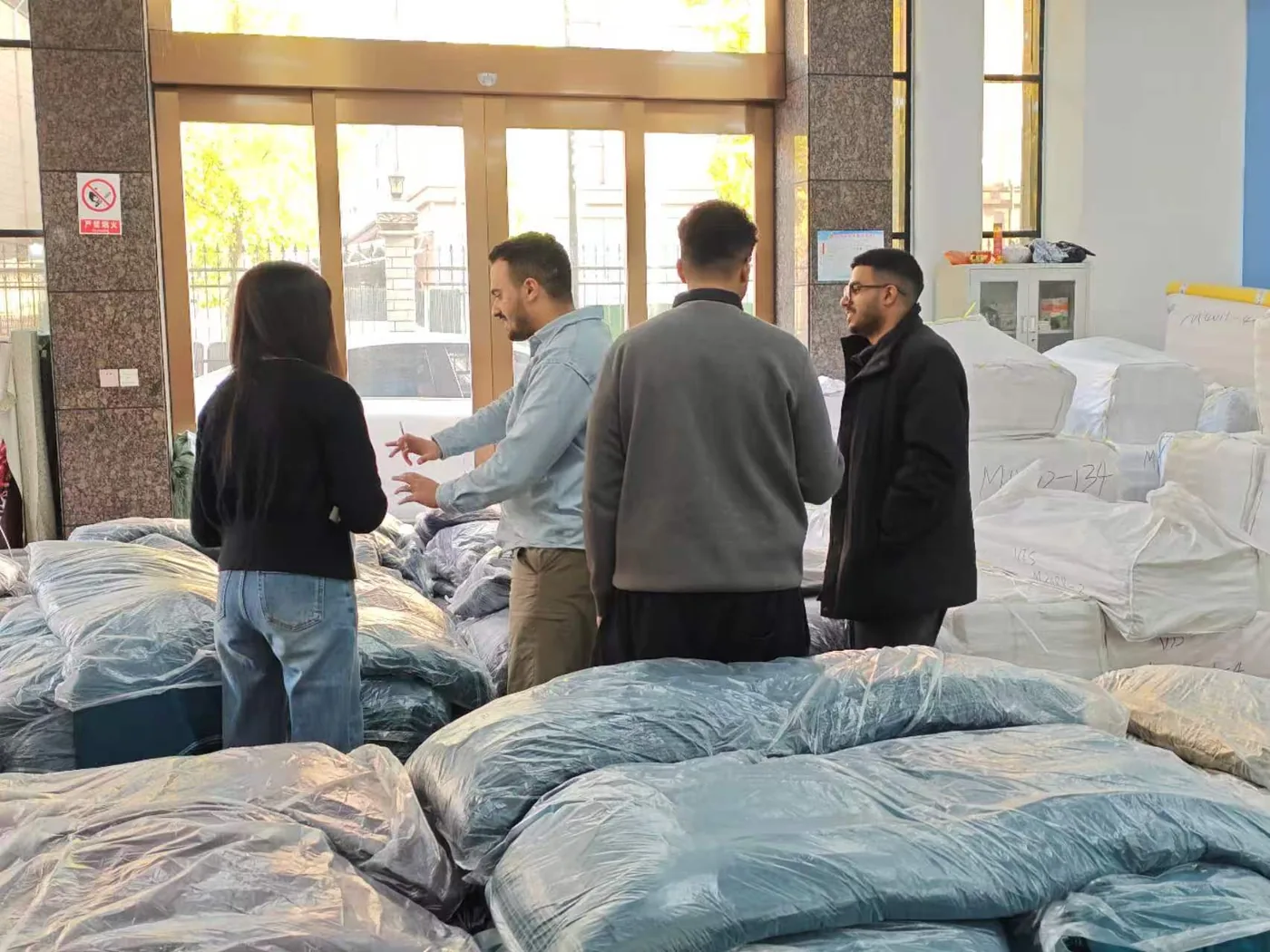
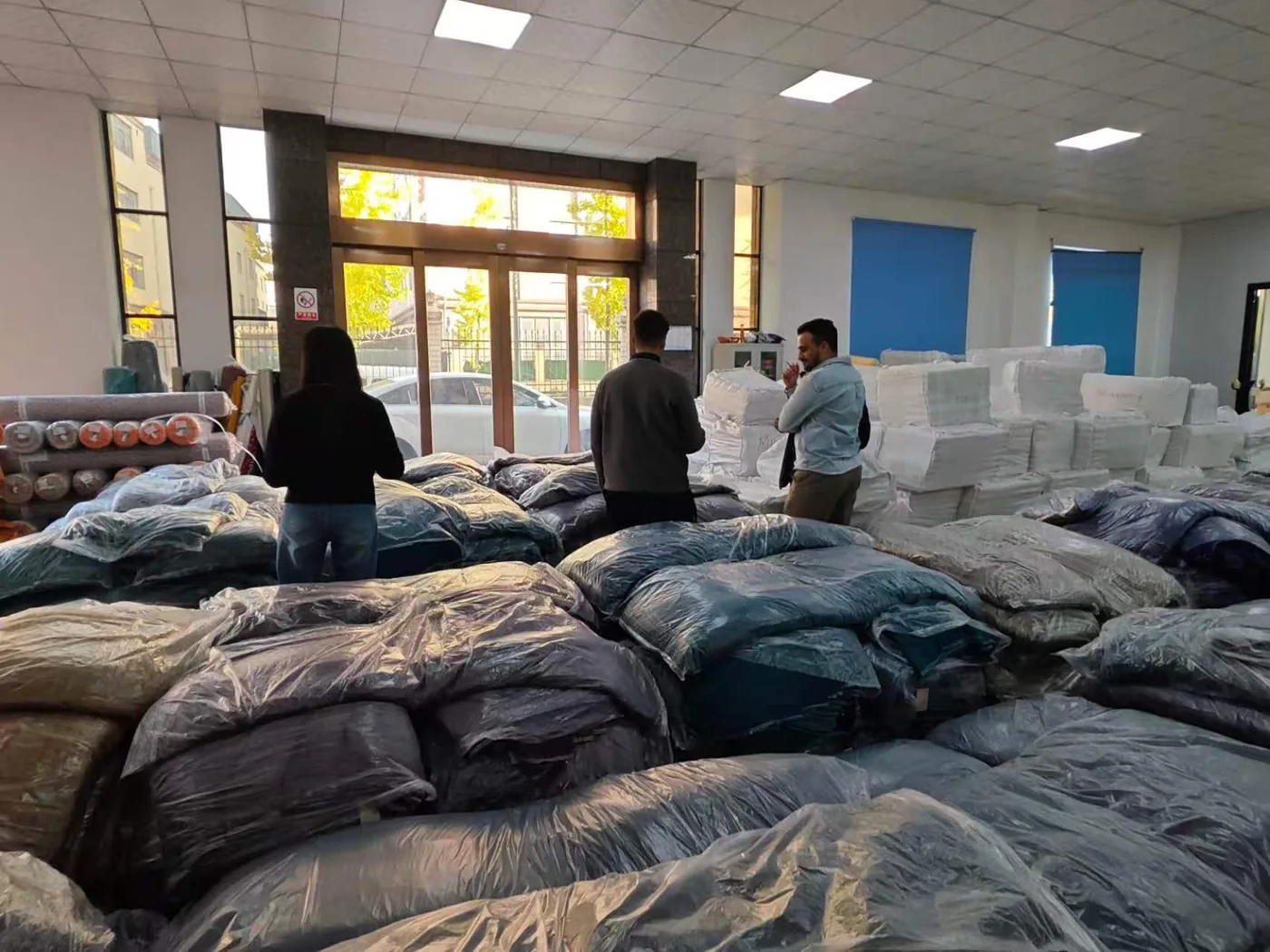
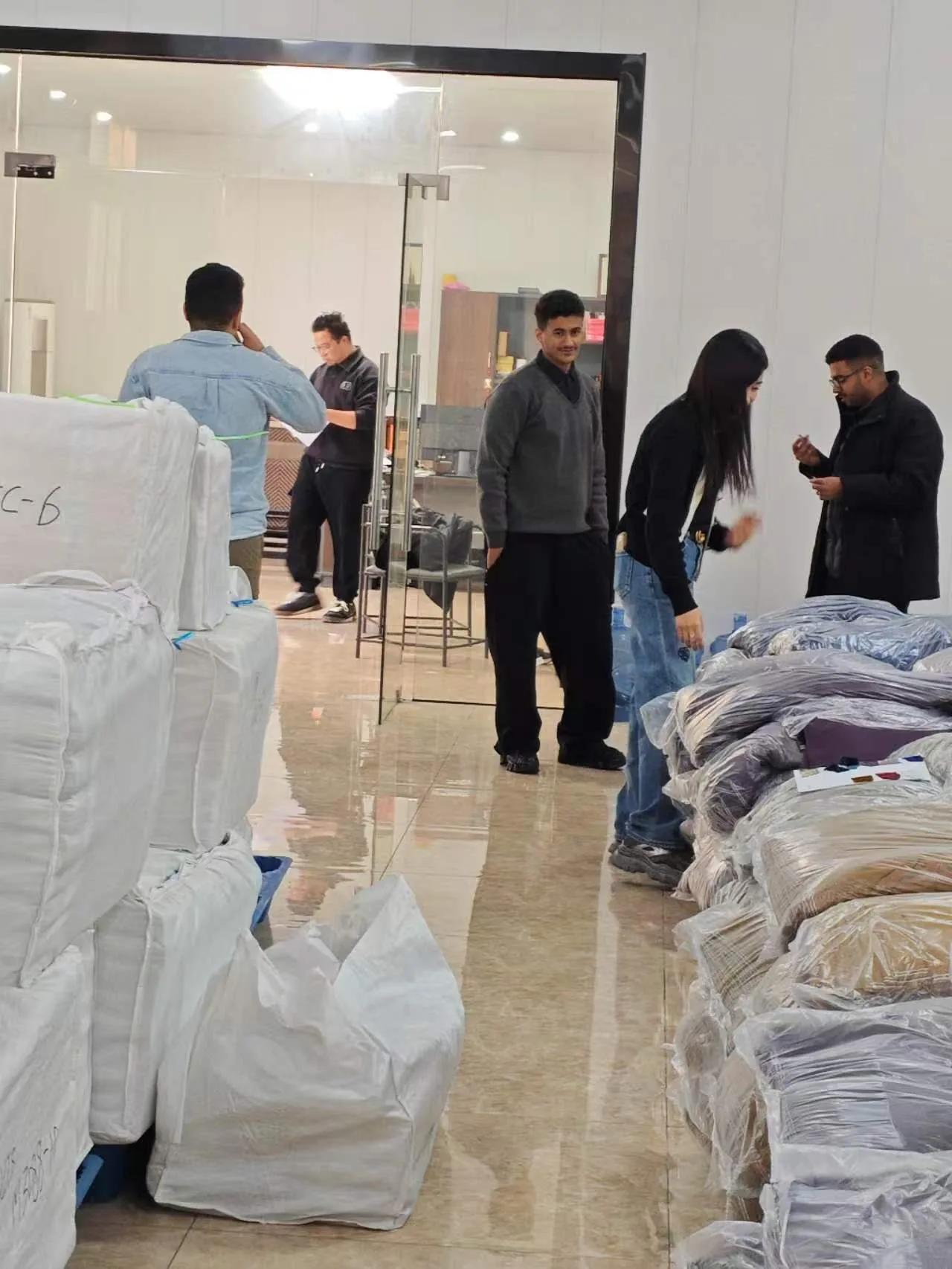
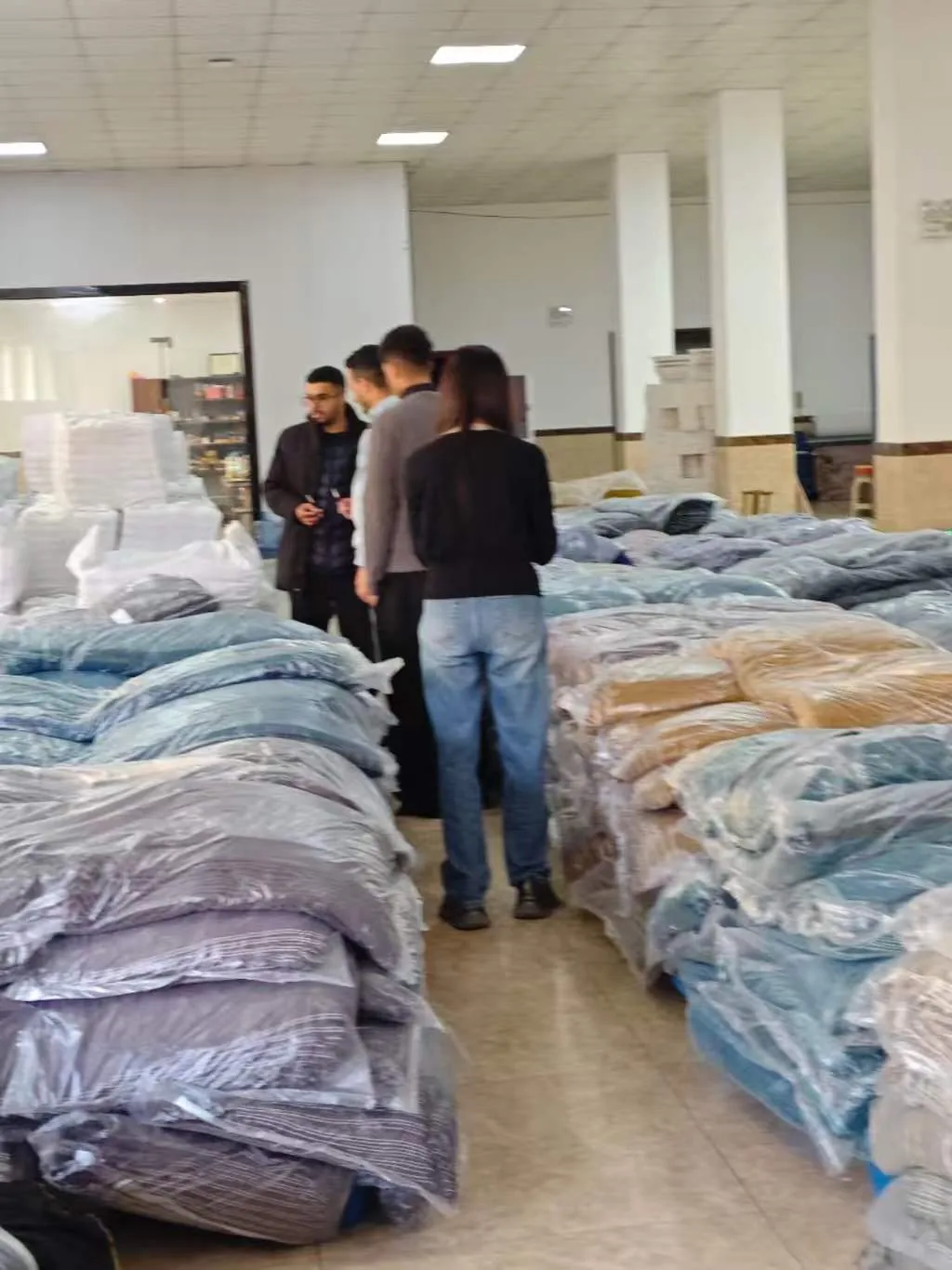
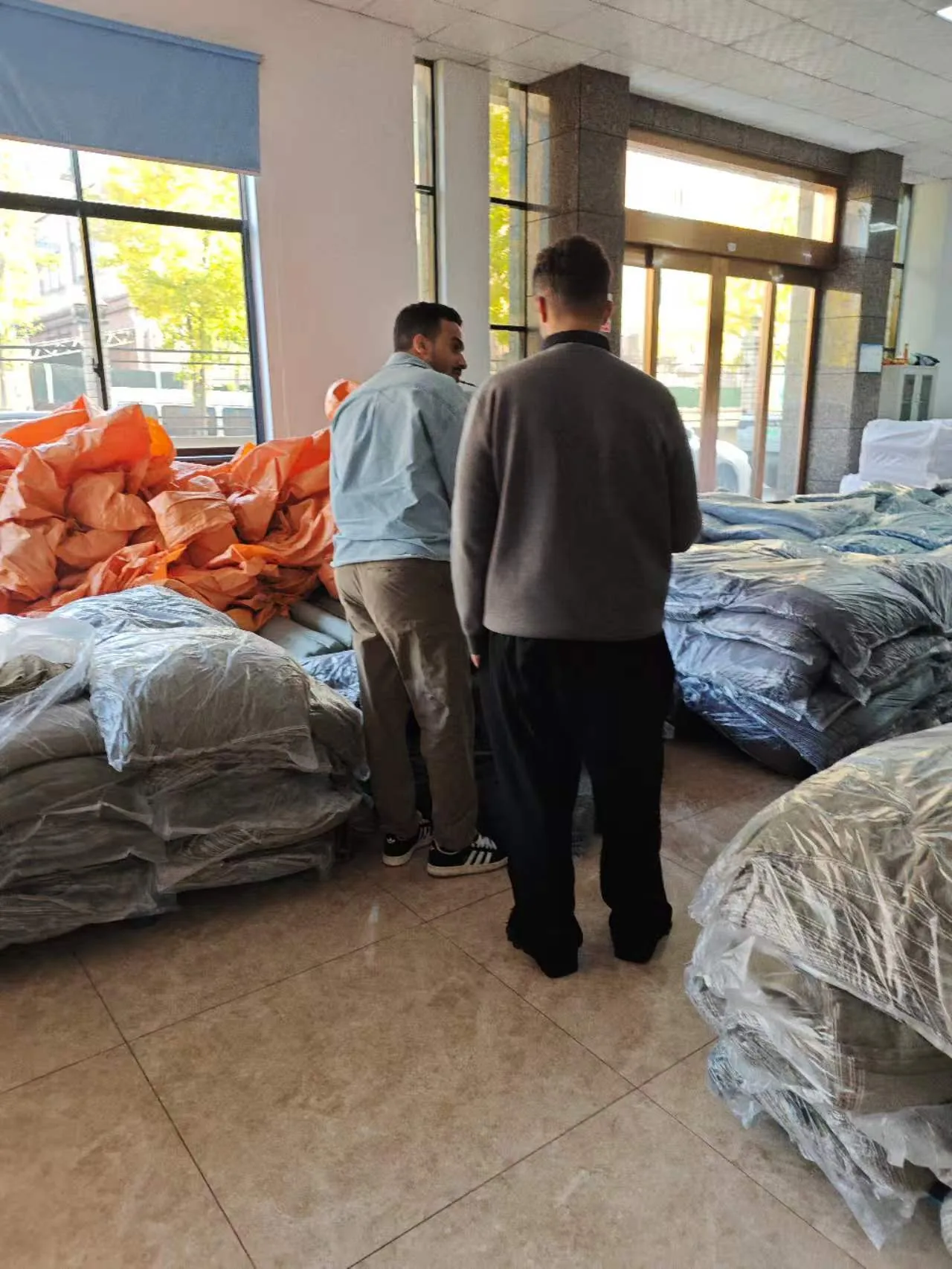
Velvet is not inspected the way flat cotton is inspected. Half of what matters on a velvet roll cannot be seen until the roll is opened, and two of the eight below are the ones that cause almost every dispute.
| Check | What we look at | Why it matters on velvet |
|---|---|---|
| Pile direction | Whether every roll is cut the same way up, and marked on the roll end | Velvet reads two different shades when you turn it against the pile. Two rolls cut opposite ways cannot go into the same garment panel, and the difference only shows after cutting. |
| Pressure marks | Flat creases where a roll sat under weight in storage or in the container | Pile does not spring back. A crease that has set is a permanent shading line, not a fold that irons out. It is the single most common velvet complaint and it is invisible on a wrapped roll. |
| Weight (GSM) | A cut sample weighed against the ordered GSM | Velvet weight is pile plus ground. A light roll still measures the right width and still feels soft in the hand, so weight has to be weighed, not judged. |
| Width | Measured at three points per roll, not one | Selvedge-to-selvedge can drift inside a single roll. Velvet cannot be stented back after finishing the way flat cotton can. |
| Colour consistency | Roll ends compared under the same light, one dye batch against the next | Velvet absorbs light, so the same numeric shade difference reads larger than it would on poplin or twill. |
| Defects, 4-point | Every roll opened and scored on the 4-point system | Pile crush, loom stop marks and dye streaks only exist on the open roll. A wrapped roll hides all three. |
| Roll length | Measured, not taken from the label | Short rolls surface at cutting, weeks after the container has left. By then the cost is a replacement air shipment. |
| Packing | Roll wrapped in film, both ends protected, no roll standing on its end | Film keeps moisture and handling off the pile. A roll stood on end flattens its own edge under its own weight. |
An inspection ends with a signature. Loading is where that signature gets tested, because from the moment the doors close the goods are out of the buyer's reach until the container arrives.
These three frames are from 23 August 2026, at the Zhuji plant, loading a full container of bagged fabric. The trailer belongs to the haulier and not to us — the plate is blanked out because it is not our vehicle to publish.
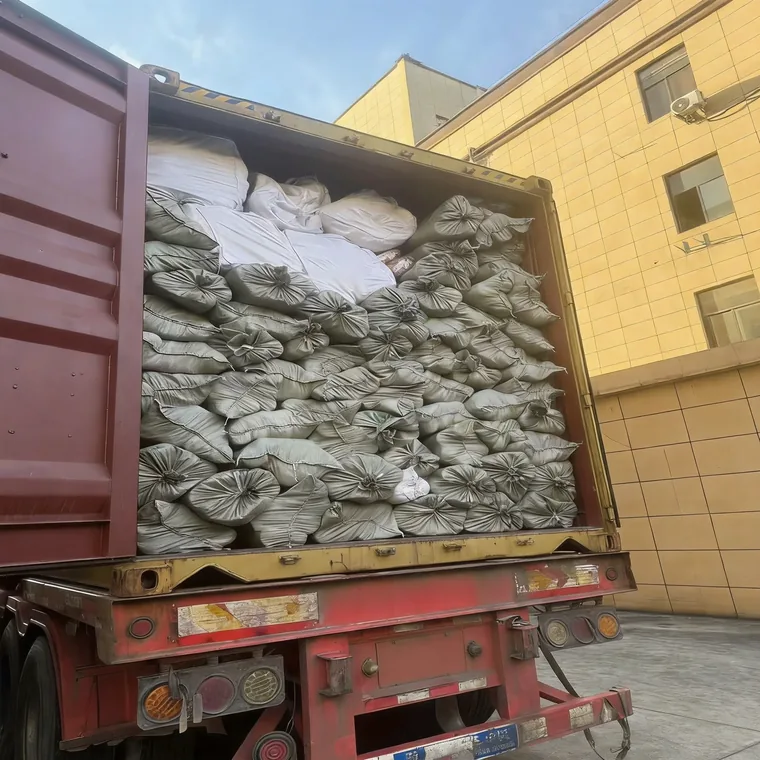
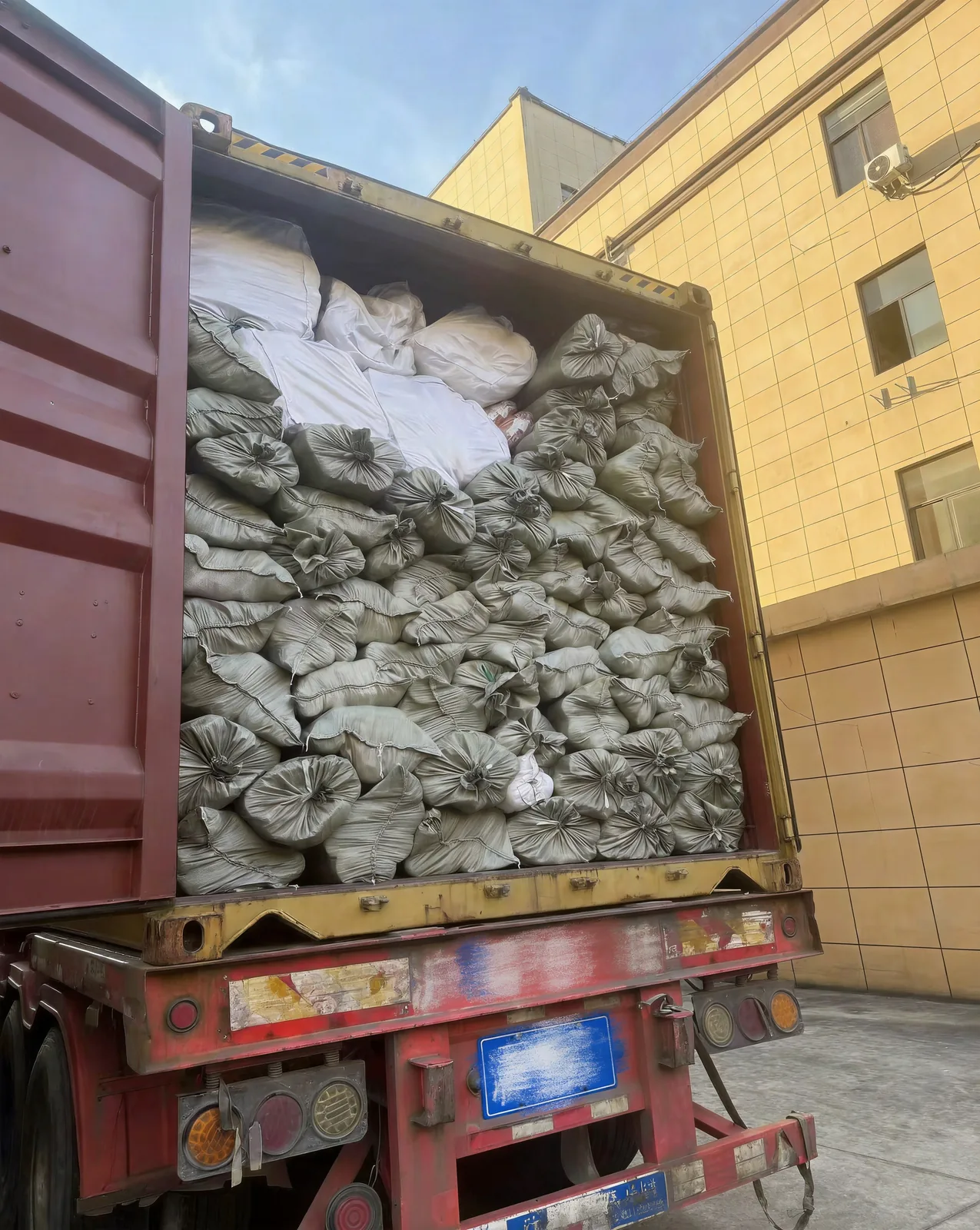
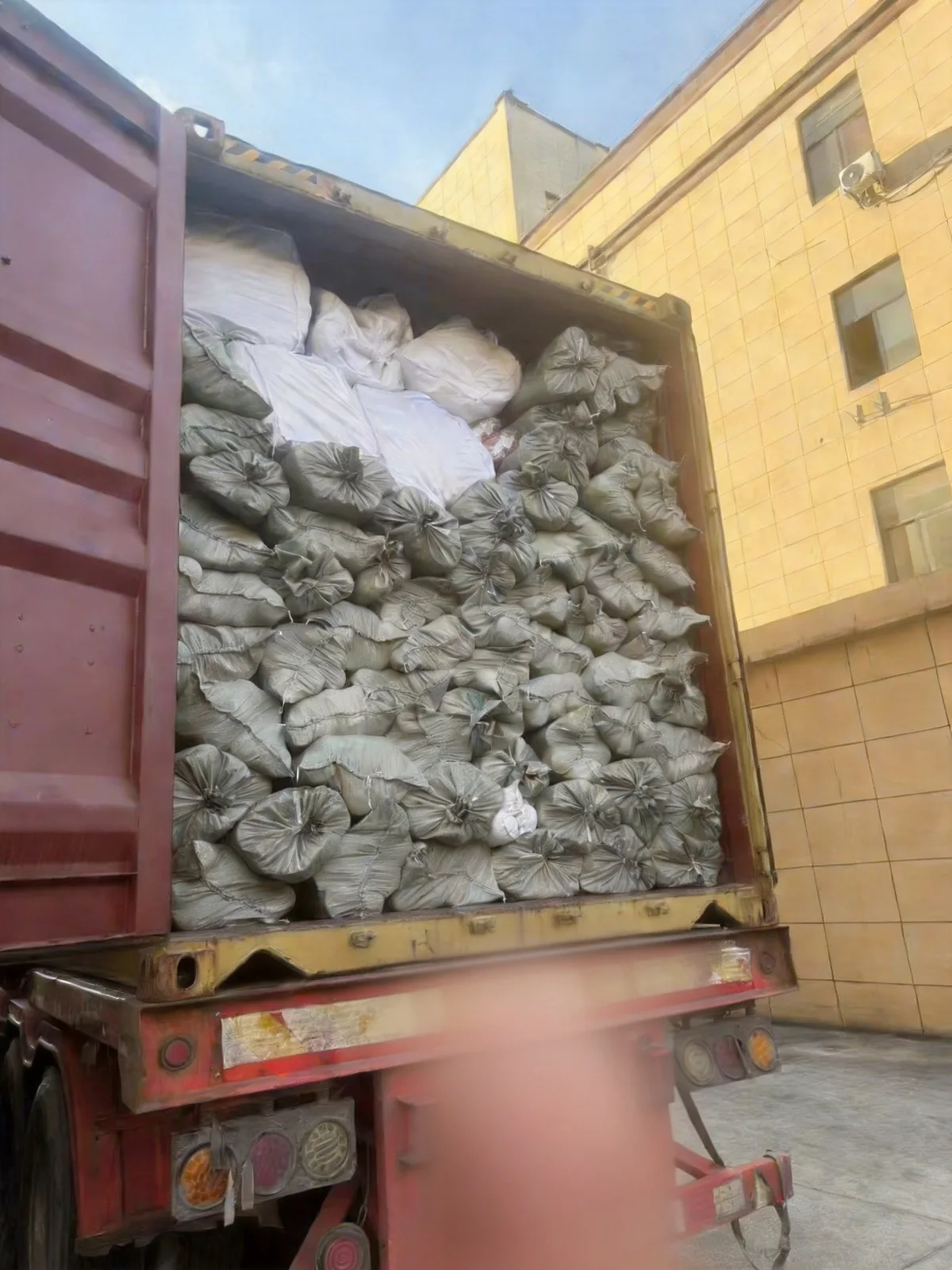
Loaded tight, not loaded full. The bags go up to the roof with no void left at the doors. A half-filled container lets the load shift in transit, and shifted fabric arrives with pressure marks that no inspection at origin could have predicted.
Photographed before the doors close. The loading is shot while the container is still open, so the batch list can be checked against what actually went in rather than against what was meant to go in. Ask any supplier whether their loading photos are taken before or after the doors shut.
1. The batch numbers are on the bags, not in a spreadsheet. MW 12-134, W15 and C-6 are written in marker on the white woven bags in the frames above. That is the same number the buyer is holding against his order sheet. If a mill cannot show you the batch number in the frame, the photo proves nothing.
2. The rolls are on the floor, not stacked high. Velvet rolls laid flat on a clean floor and walked between are being checked. Rolls stacked four high and photographed from the aisle are being stored. There is a difference, and the difference is pressure marks.
3. The rolls are wrapped, but the ends are open. Clear film keeps moisture and handling off the pile. The roll ends stay open so the buyer can read the batch mark and see the shade without unwrapping the whole roll. Wrapping the ends too would look tidier and tell you less.
Yes. You can come to the Keqiao showroom or the Zhuji factory and inspect the rolls yourself, or send someone on your behalf. Inspection runs against the batch list, and we open every roll you want opened.
Yes. SGS, Intertek and Bureau Veritas are all arranged on request, quoted per order. We do not choose the inspector and we do not sit in on the report.
Yes, and this page is what that looks like. Every shipment can be photographed roll by roll against the batch list before loading, with the batch numbers visible in the frame.
A defect-scoring method where each defect is charged 1 to 4 points depending on its length, and a roll passes or fails on total points per 100 square yards. It is the standard most buyers use to make velvet accept-or-reject decisions comparable between mills.
No. The visit itself is free. What costs money is your travel, and we would rather you spent it than took our word for the stock.
Showroom at No. 1818 Qiaobei Road, Keqiao District, Shaoxing. Factory at No.5 Wenchuang Road, Fengqiao Town, Zhuji. Both are open Monday to Saturday, 8:30 to 18:00 (GMT+8).
Arrange an Inspection