What Is Viscose Nylon Velvet? Composition, Hand Feel, and How to Tell It From Polyester
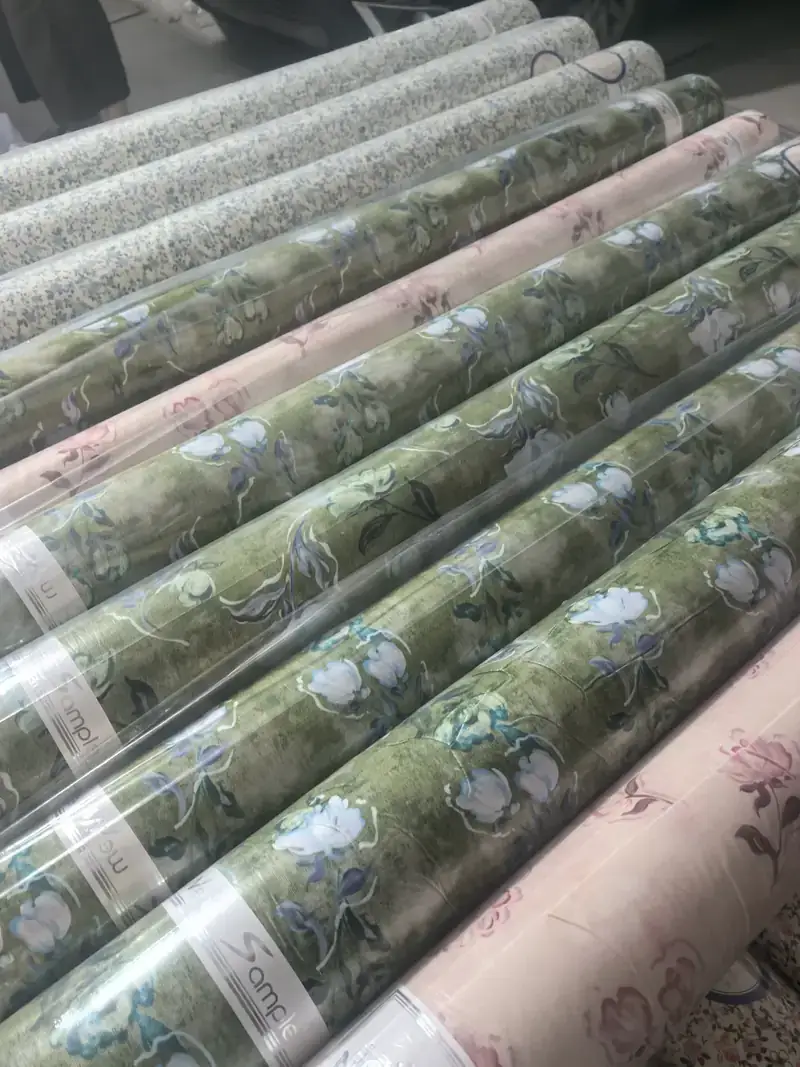
Viscose nylon velvet is a woven velvet in which the pile — the raised face you touch — is 80% viscose (also called rayon), and the ground cloth that holds the pile is 20% nylon. The viscose gives the fabric its deep, silk-like lustre and soft drape. The nylon gives it dimensional stability and the strength to hold a pile that would otherwise pull out under abrasion.
It is not the same product as all-polyester velvet, and the difference is visible in the hand within seconds. Viscose pile has a deeper, softer sheen that shifts as the fabric moves. Polyester pile is brighter and flatter, with a slightly plastic cast under daylight, and it drapes stiffer. For abaya, kaftan, dirac and hijab work — garments that are judged on how they fall — the difference is the whole point.
What each fibre does
| Fibre | Share | Role in the cloth | What it contributes |
|---|---|---|---|
| Viscose (rayon) | 80% | The pile | Lustre, drape, moisture absorbency, dye depth |
| Nylon (polyamide) | 20% | The ground | Tensile strength, abrasion resistance, dimensional stability |
Viscose is a regenerated cellulose fibre made from wood pulp. It takes dye readily, which is why a viscose pile can reach the deep, saturated shades that abaya and kaftan buyers ask for — the near-black navies, the oxblood reds, the emerald greens that polyester struggles to hit without looking synthetic.
Nylon is a synthetic polyamide. In velvet it is almost never the face; it is the skeleton. A pile needs something underneath that will not stretch out of shape when the fabric is cut, sewn and worn. Nylon does that at 20% of the total weight, which keeps the cloth light enough to drape.
Why the ratio is 80/20
The ratio is a balance between how the fabric feels and whether it survives.
Push the viscose above 80% and the cloth becomes beautiful but fragile: the ground loses strength, the pile sheds under abrasion, and the fabric can distort in the finish. Push the nylon above 20% and the hand coarsens — the cloth starts to feel synthetic, the lustre flattens, and it stops behaving like the silk-like velvet the market is buying.
80/20 is the point where the face still reads as real viscose velvet and the ground still passes abrasion and tensile testing. It is also the composition our certificate is issued against: OEKO-TEX Standard 100, certificate no. BJ050 121424, tested through our partner dyehouse Zhejiang Hangmin Printing Dyeing Branch.
Viscose, rayon — same fibre, two names
If you see "rayon" on a spec sheet and "viscose" on another, they are the same fibre. Viscose is the ISO and European term; rayon is the common US term. Some suppliers switch between the two within a single document, which makes a spec sheet look inconsistent when it is not. What would be a real inconsistency is seeing "viscose" in one line and "polyester" in another for the same product — that is a different fabric, not a naming difference.
How it differs from all-polyester velvet
| Viscose nylon velvet (80/20) | All-polyester velvet | |
|---|---|---|
| Lustre | Deep, shifting, silk-like | Bright, flat, uniform |
| Drape | Soft, falls close to the body | Stiffer, holds its own shape |
| Hand | Cool, slightly dry, absorbent | Slick, warmer, non-absorbent |
| Dye depth | Reaches deep saturated shades | Tends toward brighter, flatter tones |
| Cost | Higher | Lower |
| Typical use | Abaya, kaftan, dirac, hijab, occasion wear | Upholstery, costume, low-cost fashion |
Polyester velvet is not a bad fabric. It is a different fabric, and it is cheaper for reasons that show up in the hand. The problem is that the two are routinely sold under the same words, and a buyer comparing quotes without comparing composition is comparing two different products.
Three ways to check what you were actually sent
- Burn test. Take a few fibres from the pile and a few from the ground, and burn them separately. Viscose burns like paper — fast, with a light grey ash and a paper smell. Nylon melts and beads, with a celery-like smell and a hard dark bead that will not crush. Polyester also melts and beads but smells sweeter and the bead is harder. If the pile burns like paper and the ground melts, you have a viscose pile on a synthetic ground — which is what 80/20 should look like.
- Water absorption. Put a drop of water on the face. Viscose absorbs it within a few seconds and the spot darkens. Polyester pile beads the water on the surface.
- Ask for the batch test report. Composition is verified per batch by AATCC 20A / ISO 1833. The declared figure and the measured figure should both appear on the report, and the report number should trace to your production batch. If a supplier cannot produce one, the composition claim is unverified.
What we make, at this composition
| Line | Model | Composition | Weight | Width | MOQ | FOB |
|---|---|---|---|---|---|---|
| Solid-dyed velvet | MJ-VSL01 | 80% viscose / 20% nylon | ~250 GSM | 140 cm / 160 cm | 300 m per colour | from USD 3.20/m |
| Burnout (devoré) velvet | MJ-VBR01 | 80% viscose / 20% nylon | 170–220 GSM | ~140 cm | 300 m per design | from USD 3.10/m |
| Stretch velvet | MJ 7124 | 95% polyester / 5% spandex | 250 GSM | 155–160 cm | 300 m per in-stock colour | USD 2.10–2.35/m |
The third line is deliberately different. MJ 7124 is a warp-knit stretch velvet, not a woven viscose velvet — different construction, different stretch behaviour, different end use. It is on the list because buyers often ask for both in one order, not because it is a substitute.
Frequently Asked Questions
Is viscose nylon velvet the same as rayon velvet?
Yes, if the composition is the same. Viscose and rayon are two names for the same regenerated cellulose fibre. "Rayon velvet" with an 80/20 viscose-nylon build is the same cloth as "viscose velvet" with the same build.
Is viscose velvet better than polyester velvet?
For drape and lustre, yes — viscose pile has a deeper, softer sheen and falls closer to the body. For durability and price, polyester wins. Which matters more depends on whether you are making occasion wear or upholstery.
Why does my velvet feel stiff if it is 80% viscose?
Stiffness usually comes from the finish, not the fibre. A heavy back-coating, an over-tight roll, or a pile that has been compressed in transit will all make a good viscose velvet feel boardy. Ask for a fresh-cut sample from the middle of a roll, not from the outer wrap.
Does 80/20 viscose nylon velvet shrink?
Viscose shrinks more than nylon in washing. Our standard is warp ≤3% and weft ≤3% (AATCC 135 / ISO 6330). Anything above that is a finishing problem, not a fibre problem.
Can you supply the same velvet in 100% viscose?
We do not. Removing the nylon ground removes the dimensional stability, and the cloth distorts in finishing and in the cutting room. If a supplier offers you 100% viscose velvet at a similar price, ask what holds the pile in.
---